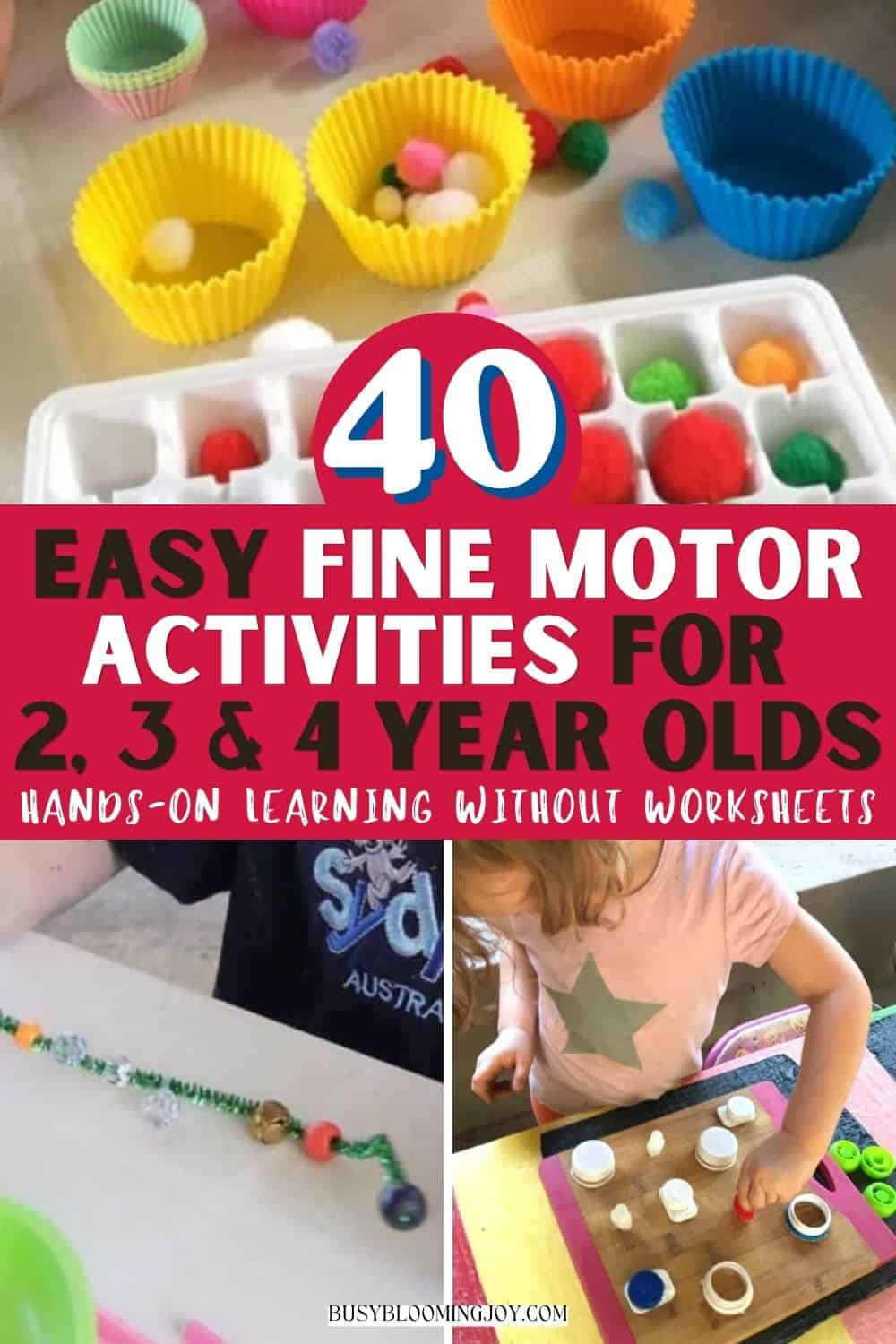

Little hands are busy hands.
(Of course, if you’re a toddler mom, no one knows this better than you!)
From the moment your 1 year old starts picking up Cheerios one by one, to the moment your 3 year old proudly zips up their own coat for the first time — fine motor skills are developing constantly.
And the best way to support that development? Play!
These fine motor activities for toddlers and preschoolers are all low-prep, use things you already have at home, and are genuinely fun. No expensive kits required.
Whether you’ve got a young toddler who’s into everything or a preschooler gearing up for school, you’ll find plenty to try here — broken down by activity type so you can dip in and out easily.
This post contains affiliate links. If you click on one and make a purchase, we may receive a commission at no extra cost to you.
What Are Fine Motor Skills — And Why Do They Matter?
Fine motor skills involve the small muscles of the hands and fingers — and the coordination between those muscles and the eyes.
They’re the skills behind everything from holding a pencil and doing up buttons, to using scissors, opening a lunchbox and eventually tying shoelaces.
For toddlers and preschoolers, building fine motor strength and control is one of the most important things you can support at home — and the good news is that almost any hands-on play counts.
Squeezing, pinching, threading, tearing, pouring, stirring, twisting — it all adds up. You’ll find all of those and more in this list.
Scooping, Pouring & Transferring Fine Motor Activities
Scooping and pouring activities are some of the easiest fine motor activities to set up at home — and some of the most satisfying for little ones.
They build hand strength, wrist control and hand-eye coordination, and most of what you need is already in your kitchen cupboards.
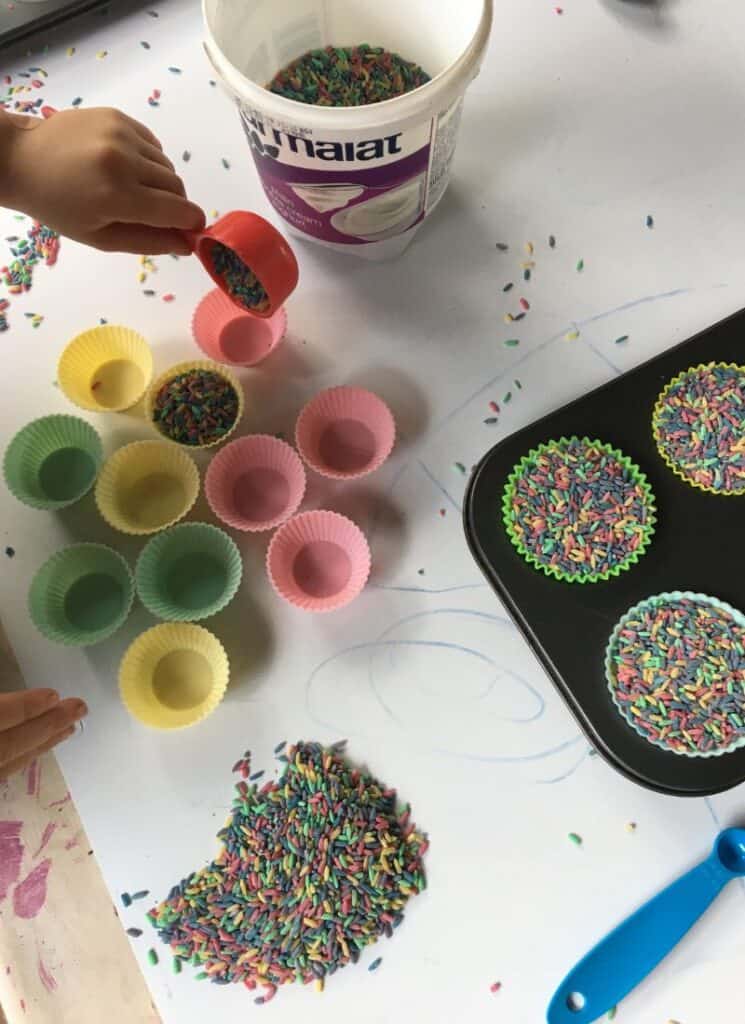
Dry Pasta Scooping & Sorting
A bowl of dried pasta, a muffin tin or ice cube tray, and a set of measuring spoons. That’s it.
Younger toddlers will happily scoop and pour; older preschoolers can sort by shape or colour. Add salad tongs or plastic tweezers to increase the fine motor challenge.
Surprisingly absorbing — and a great one to set up while you cook.
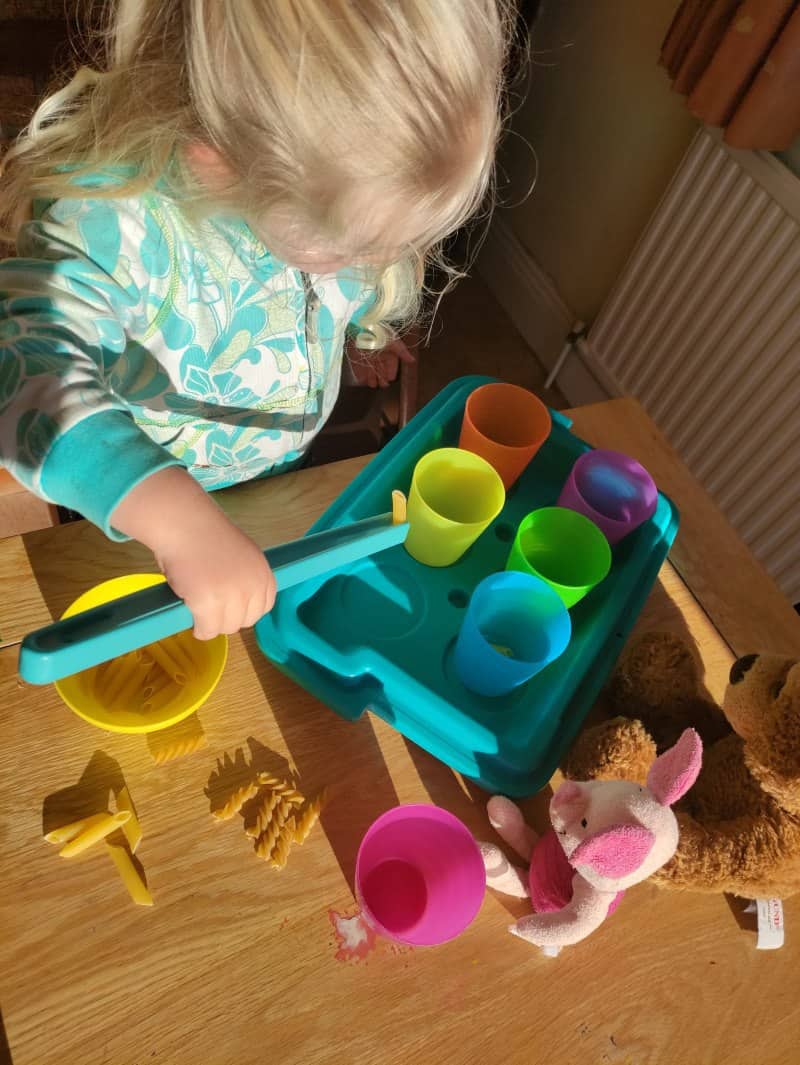
Pom Pom Transfer with Tongs
Fill a bowl with uncooked pasta and set out some small coloured containers. You could also use yogurt pots, plastic bowls or whatever else you have to hand.
Give your little one a pair of child-safe tongs or tweezers and challenge them to transfer the pasta to the different cups.
A brilliant fine motor workout that they can have fun with. My toddler loved giving her teddies a bowl of pasta for lunch, while I cooked us ours!
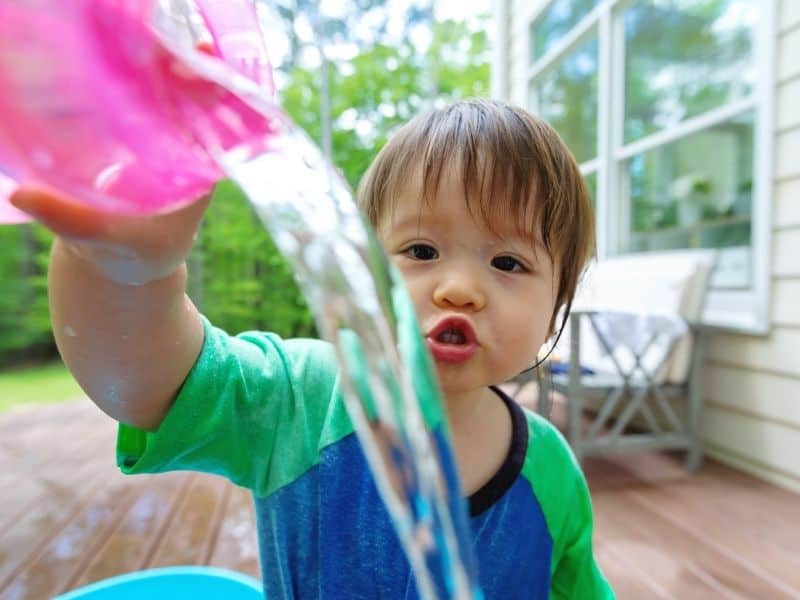
Water Pouring Play
Set your toddler up at the kitchen sink or with a tray of water and a selection of jugs, cups and small containers in different sizes.
Pouring from one container to another demands concentration, hand control and wrist strength — all key fine motor skills.
A towel underneath and a change of clothes on standby is all you need. Embrace the spillage.
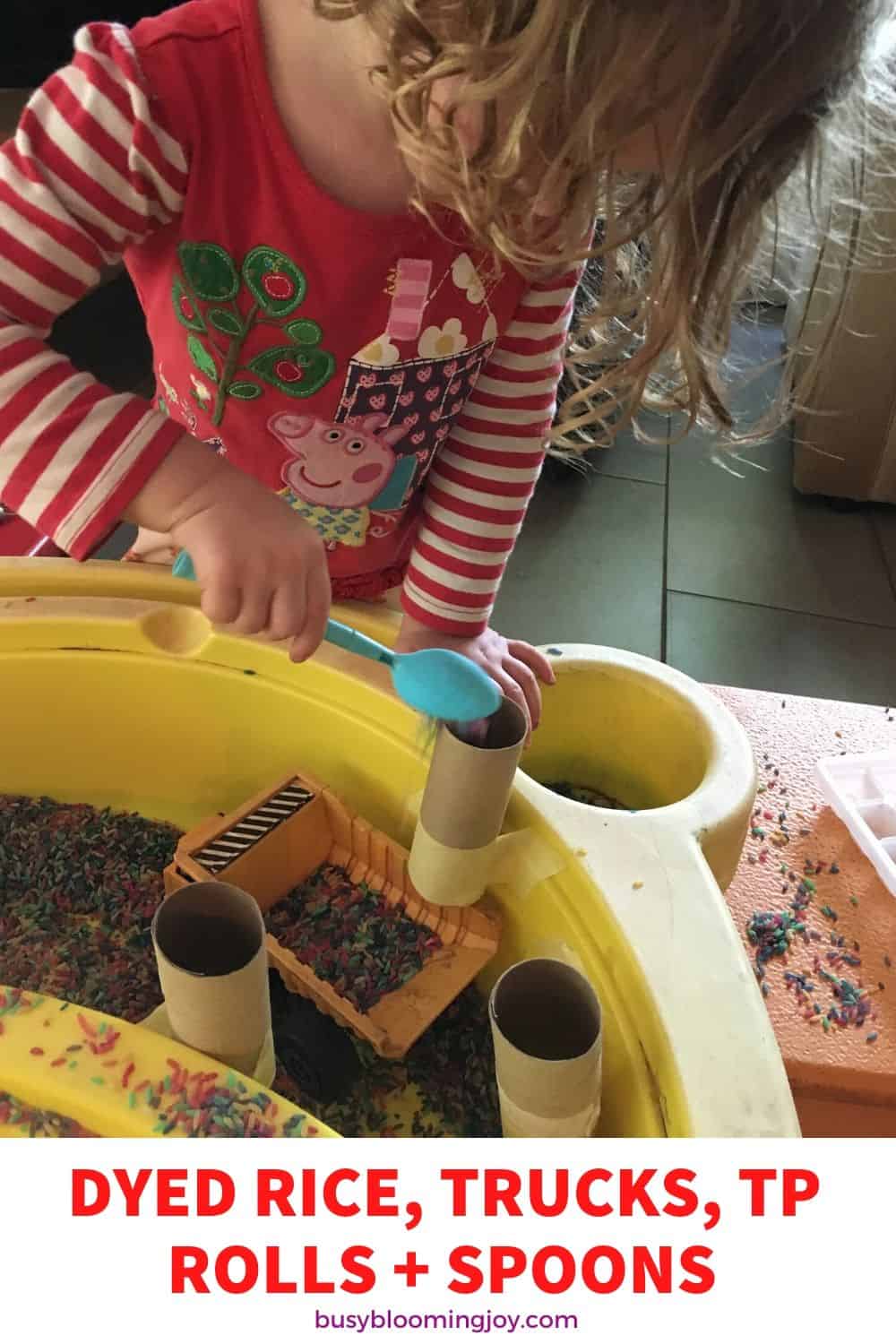
Dry Sensory Bin Scooping
Fill a shallow tub with dried rice, lentils, oats or pasta. Add scoops, funnels, cups and spoons and let your little one explore.
The act of scooping, filling and pouring works the hand muscles constantly — even if it doesn’t look like much from the outside.
Pop a sheet underneath and most of it stays contained.
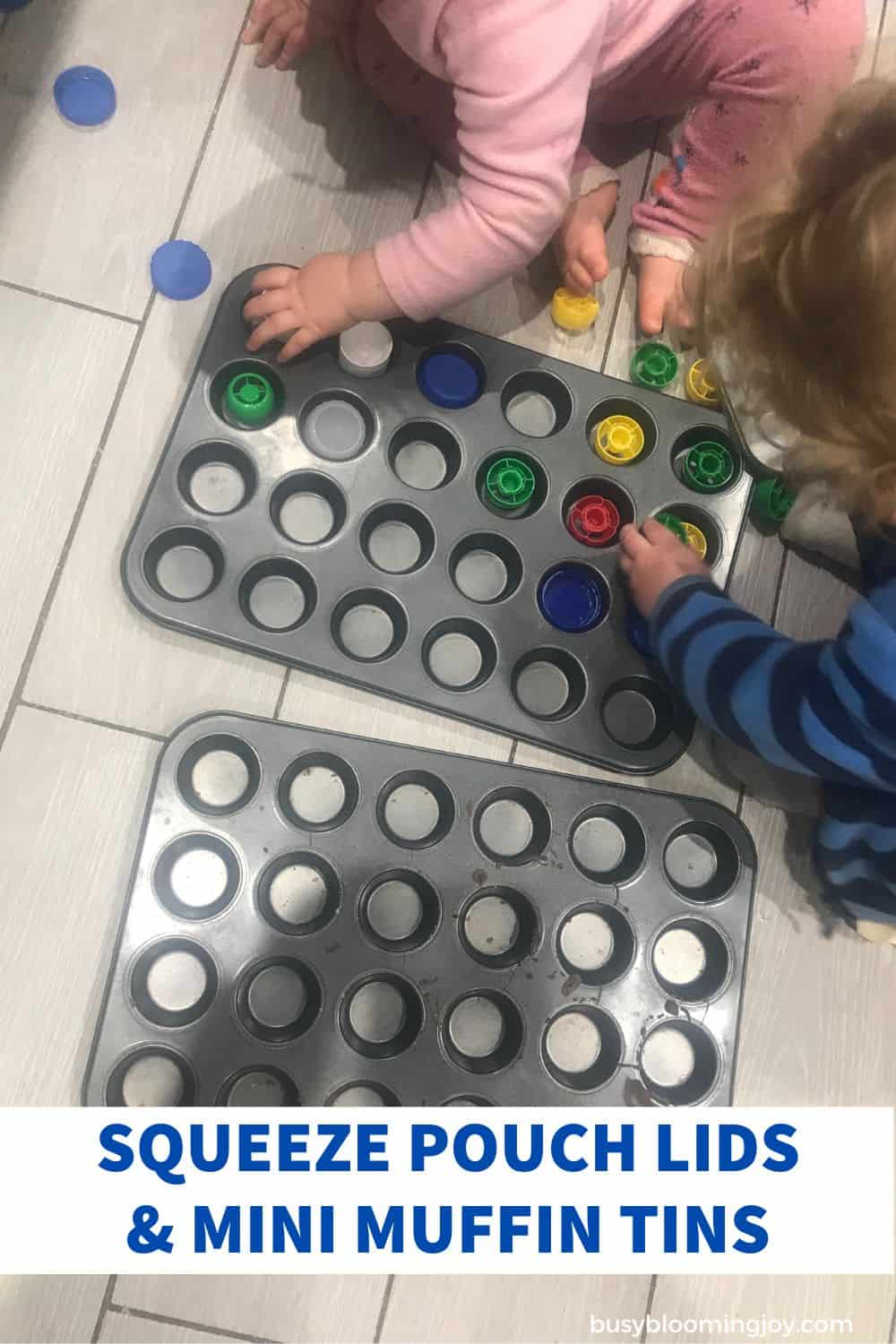
Muffin Tin & Small Objects
Give your 1 or 2 year old a muffin tin and a bowl of small objects to sort into the cups — pompoms, buttons, small toys, dried pasta, plastic eggs.
The pinching and placing motion is fantastic for developing the pincer grip — the same grip they’ll use to hold a pencil.
Simple, contained and endlessly varied depending on what you have to hand.
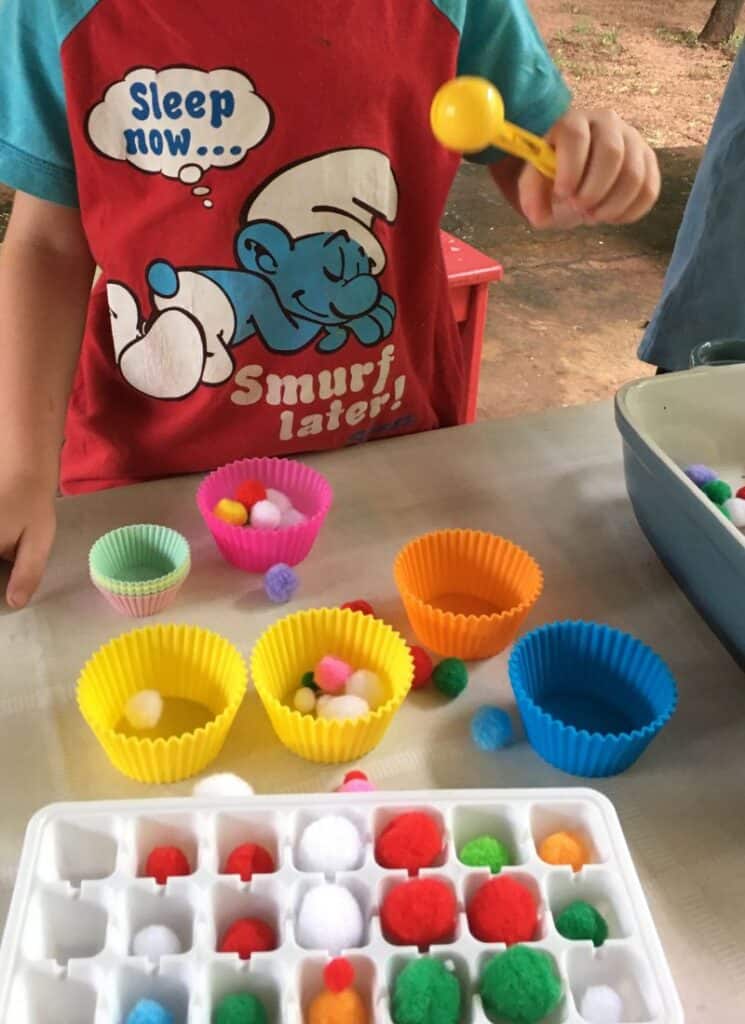
Ice Cube Tray Sorting
An ice cube tray and a bowl of small mixed items — beads, buttons, dried beans, small pompoms — plus a pair of tweezers or tongs.
Challenge your preschooler to fill each compartment with just one type of item. Sorting while using tweezers is a serious fine motor workout for little fingers.
Start with large items and work down in size as coordination improves.
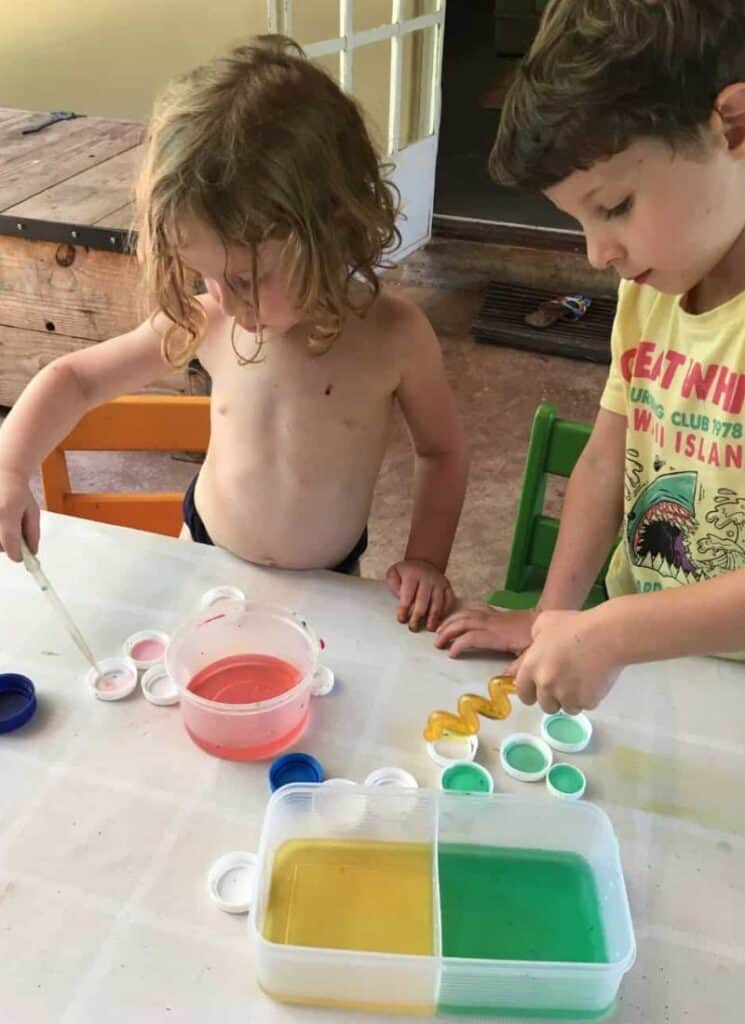
Squeezing with Pipettes
Fill small cups or a tray with coloured water and give your little one a pipette or turkey baster to transfer the liquid from cup to cup.
Squeezing a pipette takes real hand strength — much more than it looks. It’s also brilliant for hand-eye coordination and early science concepts.
Use food colouring and a white egg carton tray for a beautiful colour mixing activity at the same time.
For more ideas using everyday household items, our mess-free toddler activities at home post is full of fine motor-friendly play ideas.
Threading & Lacing Fine Motor Activities
Threading and lacing activities are among the very best fine motor activities for toddlers and preschoolers.
They demand concentration, hand-eye coordination and precise finger control — and they build the strength and dexterity that directly supports pencil grip development.
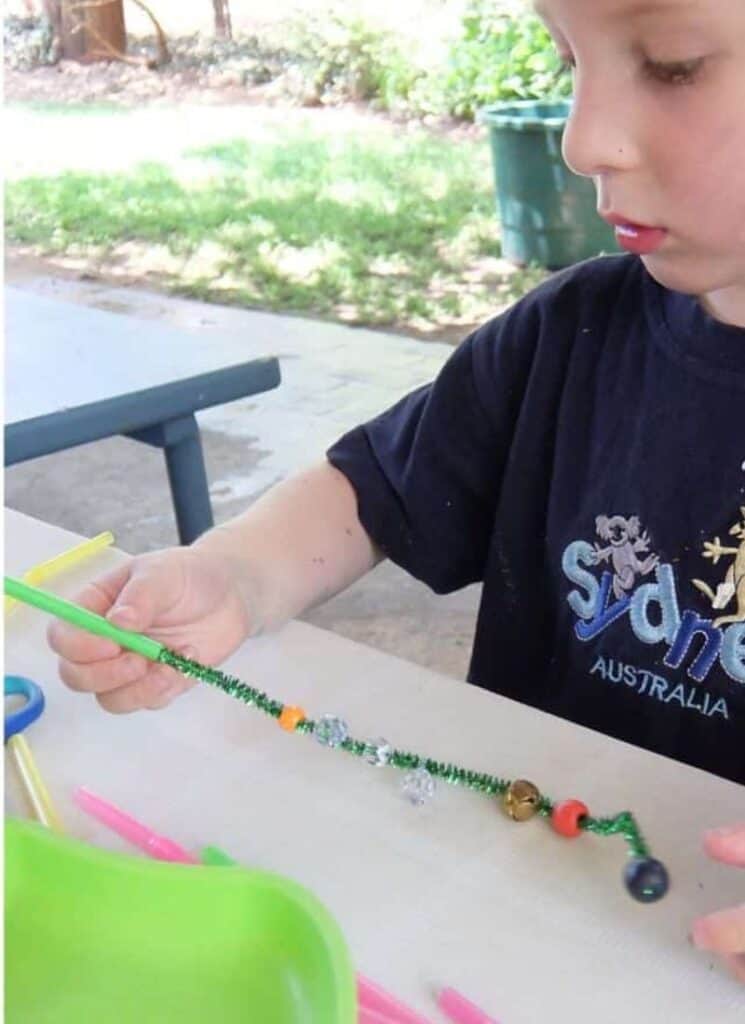
Bead Threading
Thread large wooden beads onto a shoelace or thick cord, with a knot tied at one end to stop them falling off, or a pipe cleaner.
Start with very large beads for 1 and 2 year olds, and move to smaller ones as your little one’s dexterity grows.
Threading is one of those quietly engrossing activities that can keep a preschooler focused for a surprisingly long time.
Pasta Threading
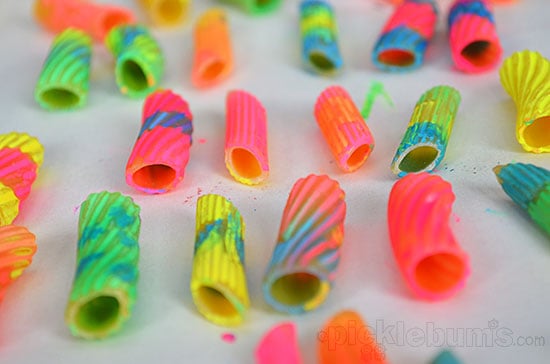
Thread dried pasta tubes (penne or rigatoni work best) onto a piece of string or pipe cleaner.
A brilliant alternative to bought threading toys — free, easy to set up and just as effective for developing fine motor skills.
Once they’ve threaded a string, tie the ends together and you have a pasta necklace. 2 year olds are very proud of these.
Straw Threading
Cut drinking straws into short pieces and thread them onto a pipe cleaner or stiff string.
Slightly trickier than pasta threading as the pieces are lighter and move around more — a good step up for a 3 year old who has mastered the basics.
Try following a colour pattern for an extra cognitive challenge alongside the fine motor work.
Lacing Cards & Crafts
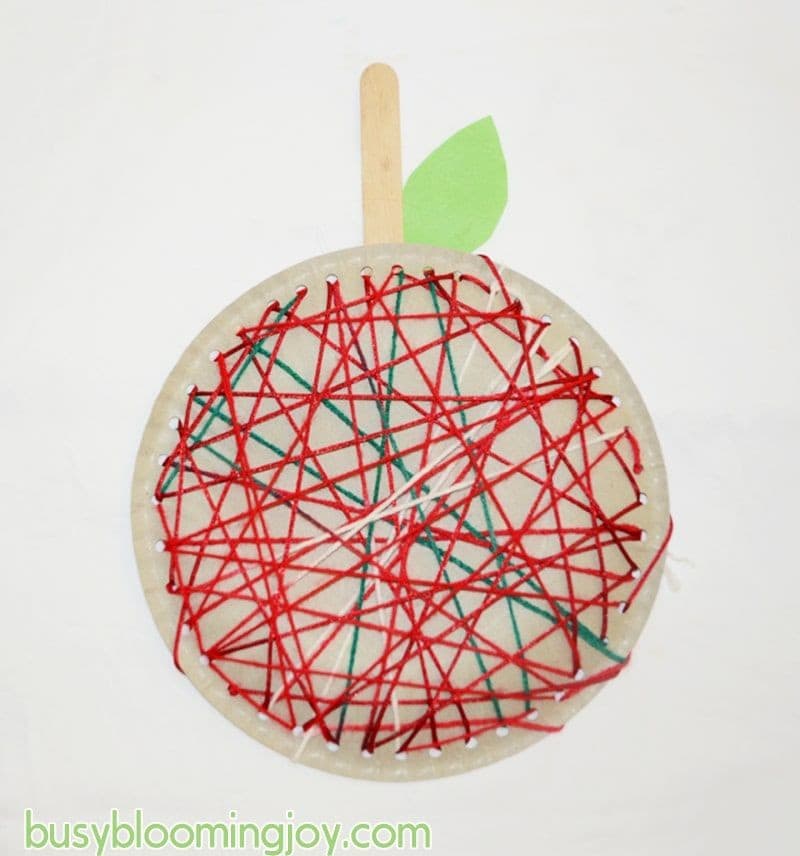
Punch holes around the edge of a piece of card or a paper plate and give your little one a shoelace to thread through.
You can draw a simple shape or picture on the card for added fun — a sun, a flower, or try the simple lacing apple craft pictured.
The lacing becomes part of decorating the picture.
Great for 3 year olds and older preschoolers who are building up to learning to tie their own laces.
Button Threading
Thread large buttons onto a piece of elastic or thick string to make a tactile bracelet or necklace.
Pinching and pushing a button through a small loop is an excellent fine motor challenge — and a lovely sensory activity too, with different shapes and sizes to explore.
Keep buttons large and the string stiff for younger toddlers. Swap to smaller buttons as skills develop.
For our dedicated fine motor activity — the twist-top board you can make from household items — pop over to our DIY twist-top fine motor board post. It’s a brilliant one.
Cutting & Tearing Fine Motor Activities
Tearing and cutting are wonderfully effective fine motor activities — and both are things toddlers are naturally desperate to do the moment you’d rather they didn’t.
Lean into it. Give them something to tear and somewhere to direct that cutting energy — and watch the concentration on their little faces.
Paper Tearing
Give your toddler a pile of old magazines, newspapers or coloured paper and let them tear to their heart’s content.
Tearing paper strengthens the small hand muscles and works the fingers in a way that directly supports later pencil grip. It’s also deeply satisfying — especially for 1 and 2 year olds.
Collect the torn pieces to use in a collage afterwards — nothing wasted.
Playdough Cutting
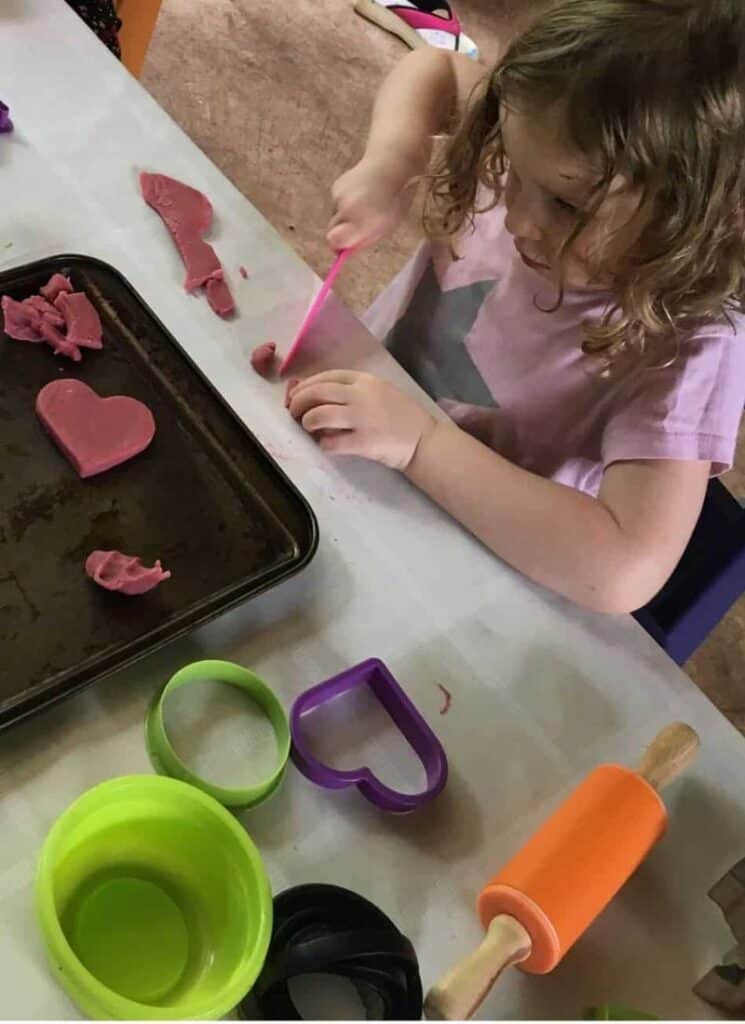
Roll playdough into sausages and give your preschooler a plastic knife or dough cutter to chop them up.
The resistance of the dough makes cutting much more of a hand workout than cutting paper — and the satisfying chop is enormously pleasing for little ones.
Roll the pieces back together and start again. This one can genuinely last 20 minutes.
Paper Fringe Cutting
Draw a line along the edge of a piece of paper and give your preschooler a pair of child-safe scissors to snip up to the line, making a fringe.
Short snips in a straight line are much easier than cutting along a path — a brilliant first cutting activity for 3 year olds who are just learning to use scissors.
Use the fringed paper to make grass for a nature scene, or hair for a funny face craft.
Snipping Straws
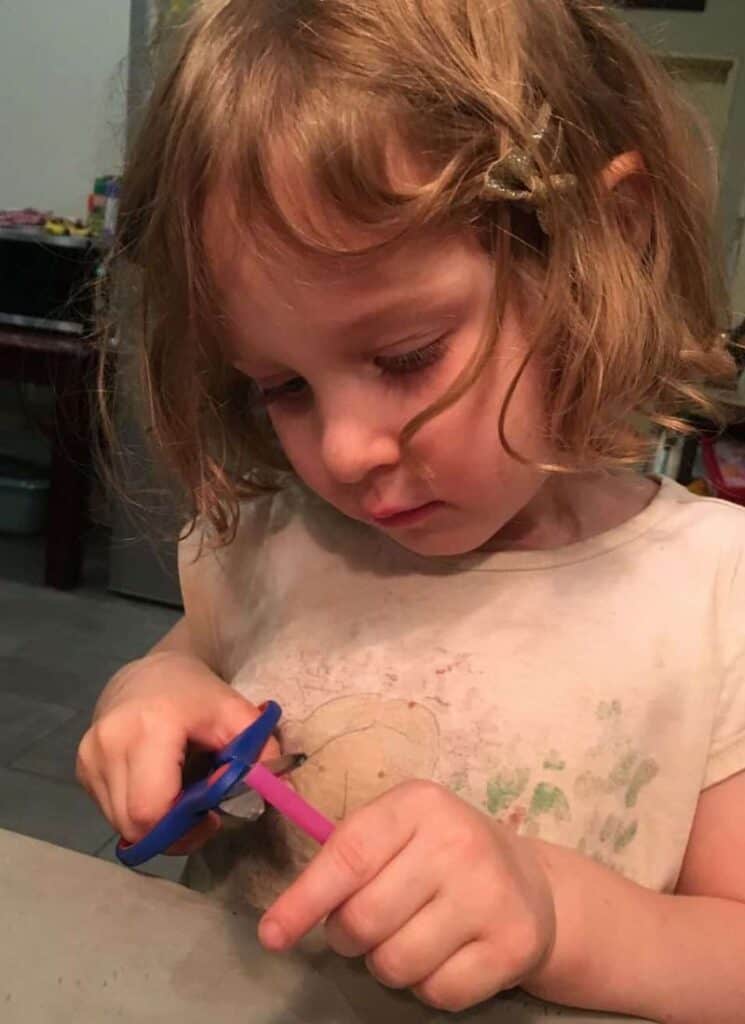
Give your little one a drinking straw and a pair of child-safe scissors and let them snip it into pieces.
Straws are satisfying to cut and the short snipping motion is perfect for building scissor control. The small pieces can be threaded afterwards for a double fine motor win.
Supervise closely and keep pieces away from very young toddlers who might put them in their mouths.
Playdough Scissors Practice
Flatten a piece of playdough into a thick strip and give your preschooler scissors to cut straight across it.
Cutting dough is more satisfying and more challenging than cutting paper — the resistance builds hand strength while the clear cut line gives a real sense of achievement.
Great for 3 and 4 year olds who are working on their scissor skills.

Tearing & Collaging
Tear coloured tissue paper, old wrapping paper or magazine pages into small pieces and sticking onto paper is so simple and engaging. The combination of tearing and precise placing is a fantastic fine motor double act for 2 and 3 year olds.
Use the torn paper to fill in a simple drawn shape — a butterfly, a rainbow, a flower.
Or create a fun self-portrait using torn out facial features – we actually used scissors for the one above but you can have success with tearing too.
For more craft ideas that build fine motor skills naturally, our arts and crafts for 1 and 2 year olds post has lots to explore.
Pinching & Squeezing Fine Motor Activities
Pinching and squeezing activities are fantastic for building the hand strength that underpins almost every fine motor skill.
The pincer grip — the pinching motion between thumb and forefinger — is one of the most important developmental milestones in early childhood, and it needs plenty of practice.
Playdough Baking
Playdough is the ultimate fine motor activity for toddlers — and for very good reason. Squishing, rolling, pinching, poking and prodding all build hand strength constantly.
Add tools — a rolling pin, cookie cutters, a plastic knife, lolly sticks — and the fine motor benefits multiply.
Make your own with flour, salt, water and food colouring for a cheap and easy batch that lasts for weeks.
Peeling Stickers/Sticker Books
Give your 1 or 2 year old a sheet of stickers and let them peel and place to their heart’s content.
Peeling stickers from their backing is a genuine pincer grip workout — much harder than it looks for little fingers.
Dot stickers, foam shapes, and repositionable stickers are all brilliant. The placing is great for hand-eye coordination too.
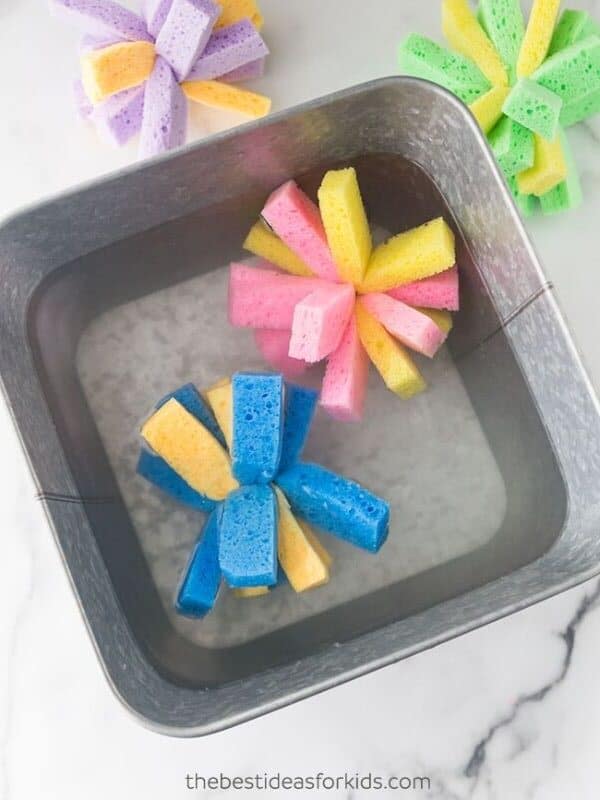
Squeezing Sponges
Try these simple sponge balls to provide many hours of water play in the summer of in the tub.
You need sponges, a string of some kind (ideally elastic string), and scissors. Then follow this sponge ball tutorial to cut the sponges up and tie them together to create the sponge balls.
(Alternatively, just use ordinary sponges.)
Then it’s time to play! Challenge your toddler to squeeze as much water as possible from the sponge or sponge ball into an empty bowl.
Simple, satisfying and a serious hand strength workout.
Add food colouring to make it more visually exciting for little ones.
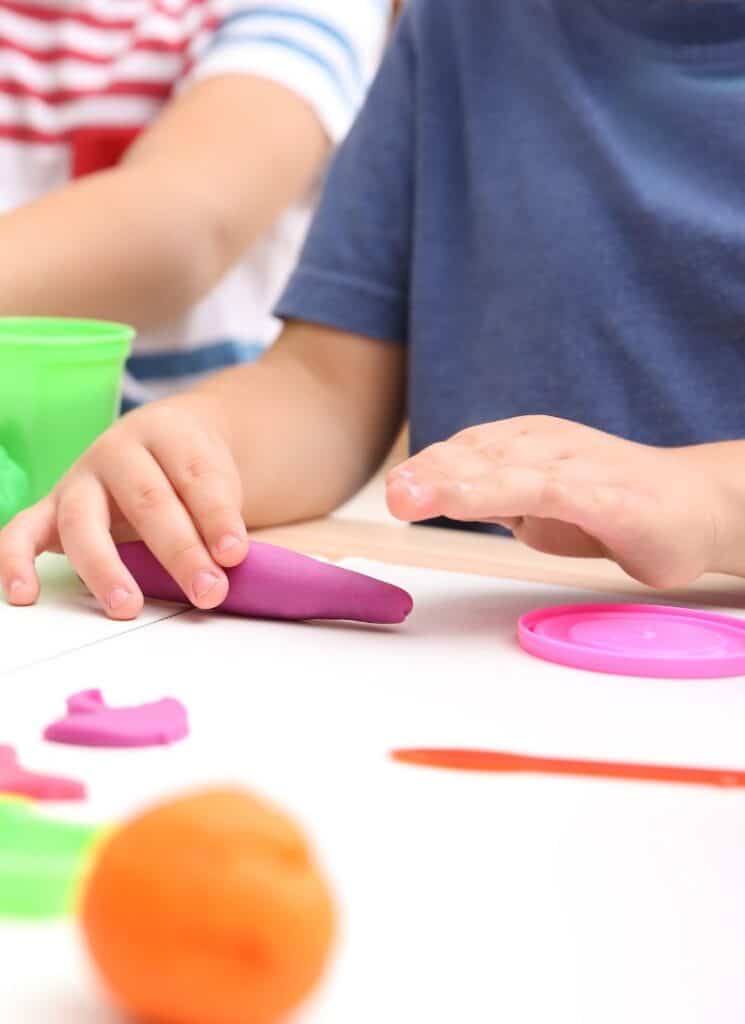
Playdough Squeezing & Rolling
Give your little one a ball of playdough and challenge them to roll it into a long sausage using just their palms, then pinch it into tiny balls using their finger and thumb.
Both motions work different muscle groups in the hand — rolling builds palm strength, pinching builds pincer control.
Let them make a playdough snake, worm or necklace with the pieces for an added creative element.
Bubble Wrap Popping
Never throw away a sheet of bubble wrap again — it is toddler gold!
Popping each bubble requires a deliberate pinching or pressing motion that works the fingers brilliantly. Most little ones are completely obsessed with it.
For older preschoolers, challenge them to only pop bubbles in a specific pattern. You can mark out the pattern first if that’s a struggle.
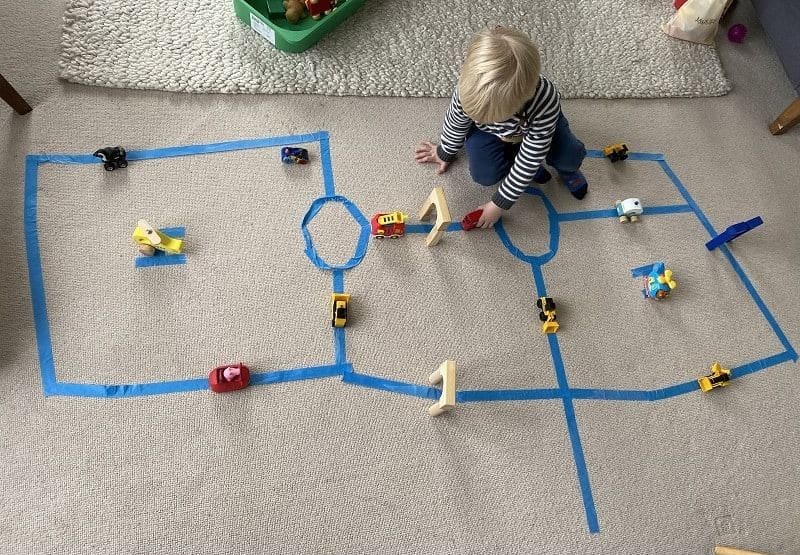
Peeling Tape
Stick strips of painter’s tape to a tray, a table or the floor and challenge your toddler to peel them all off.
Peeling tape is a wonderful pincer grip exercise that toddlers find completely irresistible. It’s one of those activities that requires no setup — just hand a roll of tape to a 2 year old and step back.
Great for developing the exact finger strength needed for early writing.
Why not try our DIY twist-top fine motor board — a brilliant toddler activity made from things you should already have at home.
Drawing, Mark-Making & Pre-Writing Activities
Pre-writing activities are fine motor activities that build the specific skills needed for handwriting — without a pencil in sight.
Tracing, drawing, painting and mark-making all strengthen the hand muscles and develop the control that makes writing much easier when the time comes.
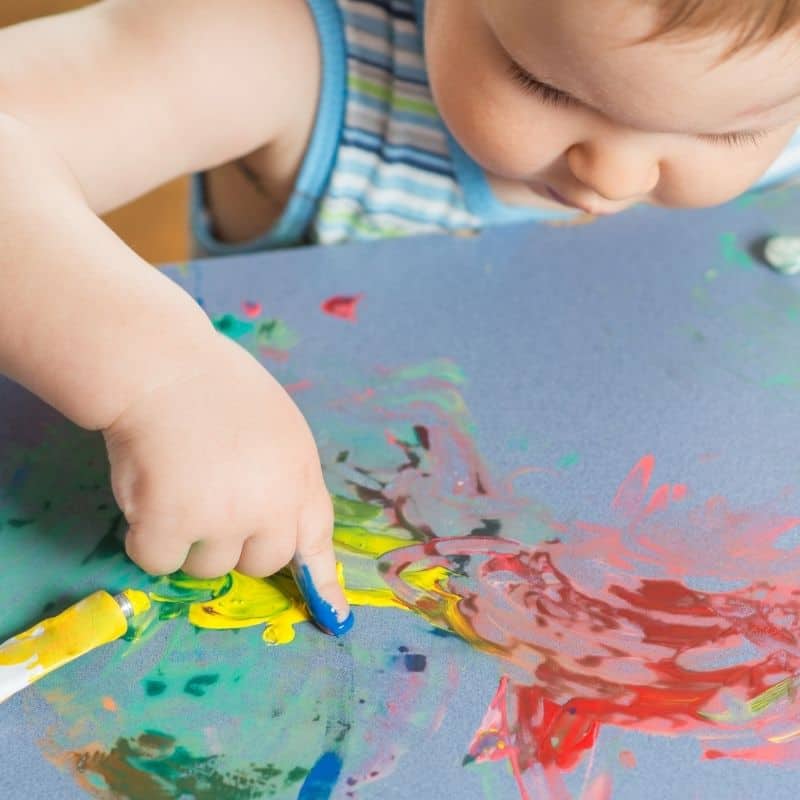
Finger Painting
The original fine motor activity. Spreading, dabbing, swirling and pressing paint with the fingers works every small muscle in the hand.
Use washable toddler paint on a large sheet of paper — or use the inside of a cardboard box for a more contained setup.
Strip your 1 year old down first. You’ll thank yourself later.
Chalk Drawing
Give your toddler chunky chalk sticks and a dark piece of card or a chalkboard and let them draw freely.
The resistance of chalk on a surface is slightly more demanding than a felt-tip on paper — which makes it great for building hand strength. Chunky chalk is ideal for small hands.
Try dark paper for a really striking effect that preschoolers especially love.
Shaving Foam Tray Drawing
Spread a thin layer of shaving foam across a baking tray. Show and engourage your toddler to draw patterns, letters or shapes with their finger.
Smooth it out and start again — endlessly resettable, which means endlessly engaging. The sensory element of the foam makes it extra absorbing.
A brilliant pre-writing activity for 2 and 3 year olds that feels like pure play.
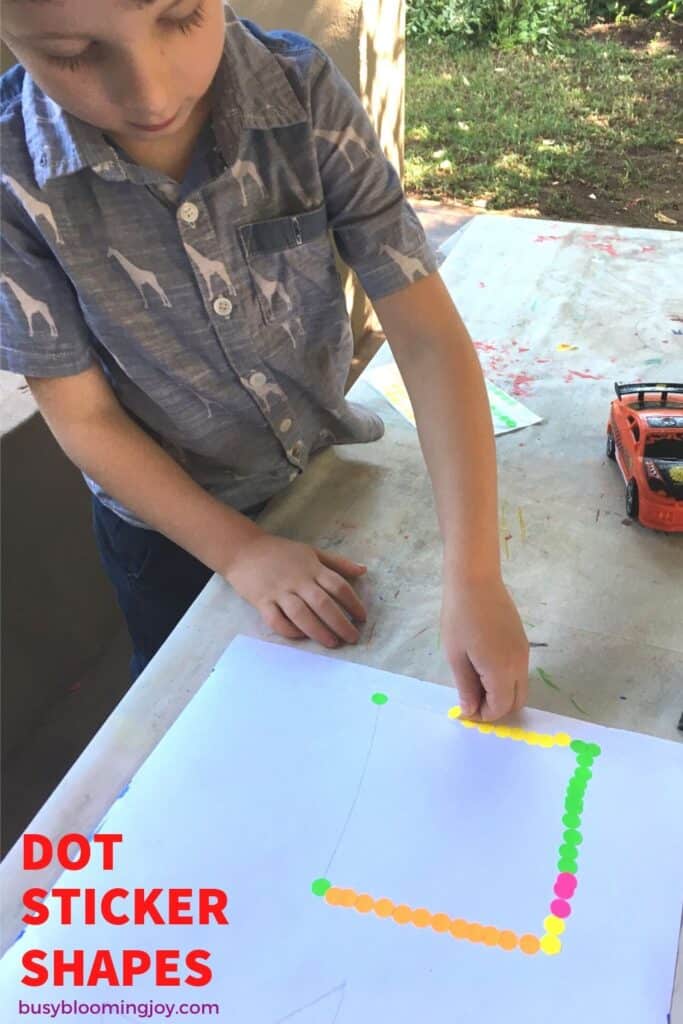
Dot Sticker Art
Draw a simple outline — an animal, a letter, a number — and challenge your preschooler to cover it with dot stickers.
Peeling and placing each sticker precisely on the line requires real control and concentration. It’s one of those activities that looks simple but is genuinely demanding for little fingers.
The finished pictures are also brilliant — colourful and completely their own.
Water Painting
Give your toddler a paintbrush, a small cup of water and some cardboard.
No mess whatsoever — it dries invisibly — but all the grip, pressure and brushstroke control of real painting. A brilliant fine motor activity for 1 and 2 year olds who aren’t quite ready for real paint.
Simple, calm and endlessly repeatable.
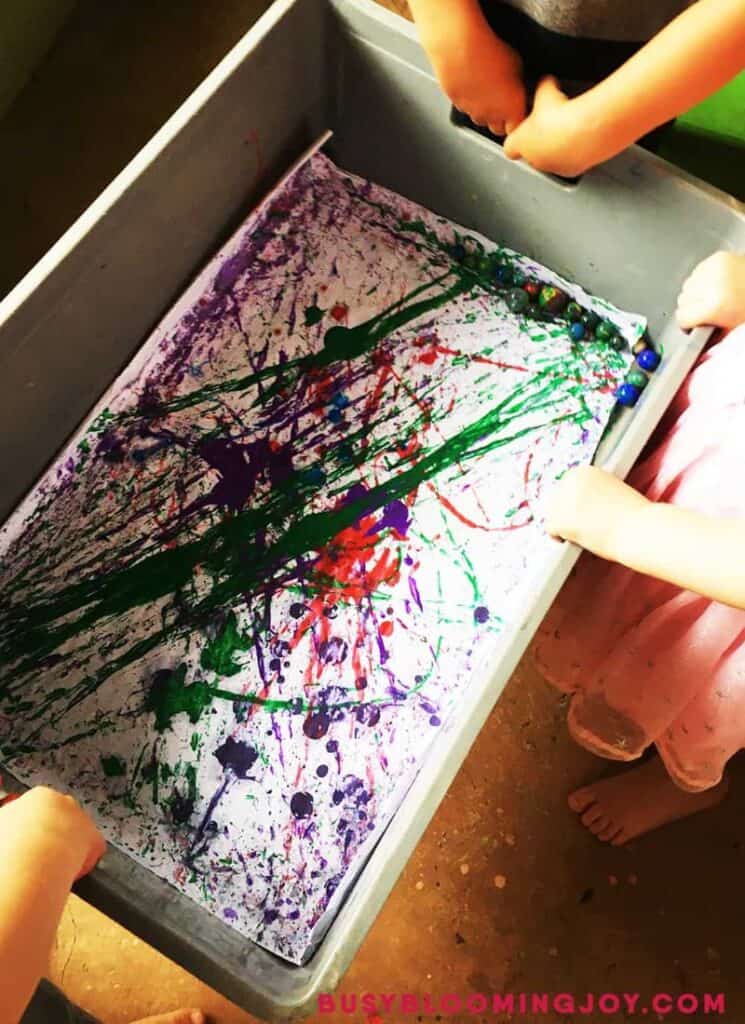
Marble Run Painting
Put a sheet of paper in a shallow box or baking tray. Drop a marble into some paint and tilt the tray to roll it across the paper.
Controlling the tilt and direction of the tray to guide the marble demands wrist control and coordination — sneaky fine motor work disguised as brilliant fun.
Use different colours for a vivid layered result that your little one will want to display proudly.
For more art activities that double as fine motor practice, our arts and crafts for 1 and 2 year olds post is full of ideas.
Everyday Fine Motor Activities for Toddlers
Here’s the thing — you don’t need to set up a special activity every time you want to work on fine motor skills.
Everyday life is full of fine motor opportunities, and toddlers love to be involved in real tasks. Here are some of the best everyday fine motor activities hiding in plain sight.
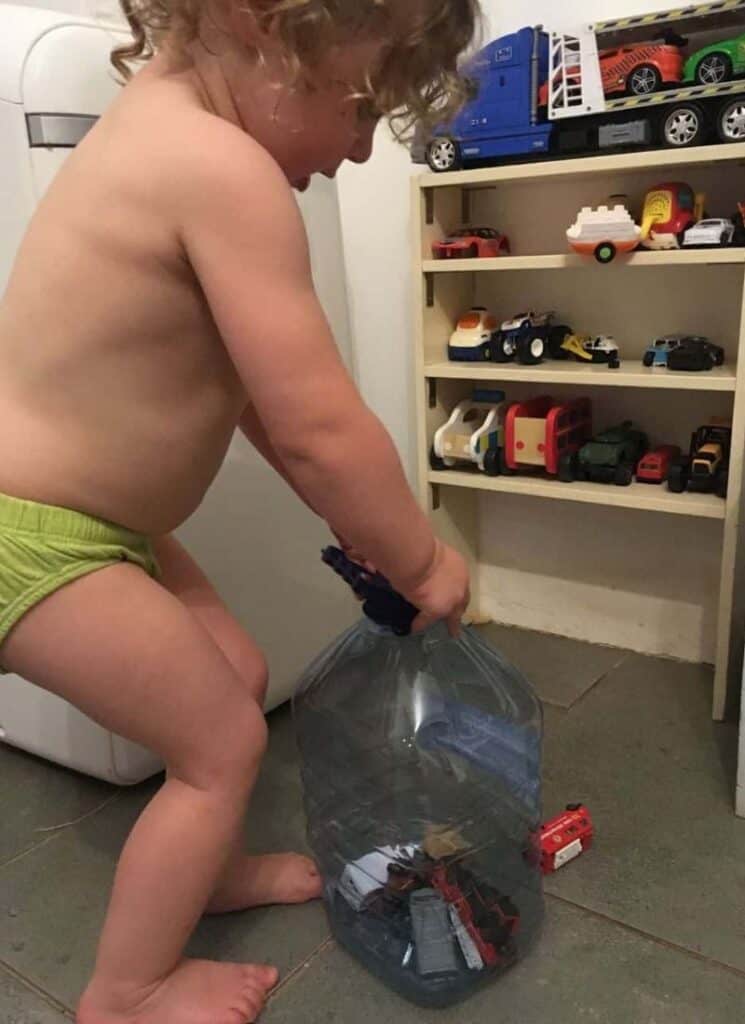
Posting Toys into a Bottle
Find a large plastic bottle with a neck just wide enough for a small toy car or building block to fit through.
Challenge your 2 year old to post them all in — and then shake them back out again. The precise aiming and releasing motion is excellent for finger control.
Deceptively simple, endlessly satisfying — and this one can genuinely last 30 minutes.
Peeling Fruit & Veg
Let your toddler peel a banana, peel a a satsuma and then pull the segments off or take the shell off a boiled egg.
The peeling motion is brilliant for pincer grip strength — and it has a built-in reward at the end.
Great for encouraging independent eating skills at the same time.
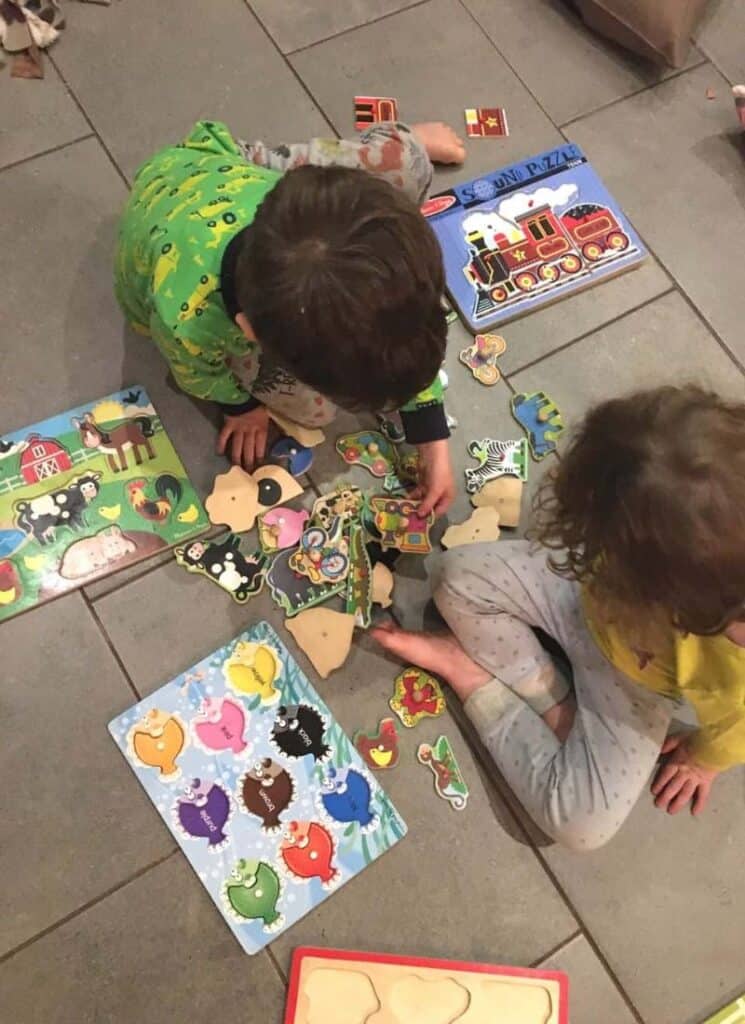
Puzzle Play
Picking up, rotating and placing puzzle pieces demands precision, hand-eye coordination and the kind of careful control that is the foundation of fine motor development.
Use chunky wooden puzzles for 1 year olds, jigsaw puzzles with larger pieces for 2 year olds, and increase complexity as your preschooler’s skills grow.
The puzzle mix-up — tipping two or three puzzles together and sorting them — is a great challenge for older 3 year olds.
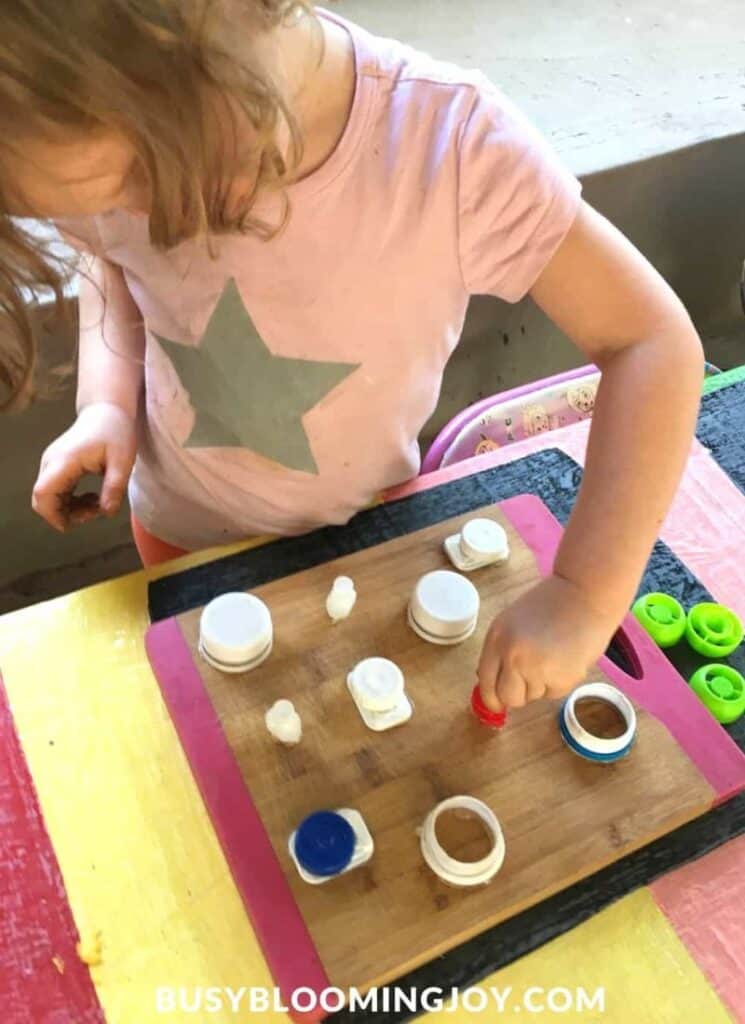
Screwing & Unscrewing Bottle Tops
Collect bottles with different sized screw-top lids and challenge your toddler to unscrew and re-screw them all.
Twisting motions are brilliant for wrist and hand strength — the exact motion used in the tripod pencil grip. A genuinely useful life skill too.
This is the basis of the brilliant DIY twist-top board — see the full post here.
Dressing Practice
Give your little one real opportunities to practise getting dressed — doing up buttons, pulling up a zip, putting on shoes.
These everyday tasks are actually some of the most demanding fine motor activities there are. A dressing frame — with buttons, zips, velcro and laces — is a brilliant Montessori-inspired tool for this.
The sense of independence and pride when a 3 year old masters a button is worth every minute of patient practice.
Cooking & Baking Together
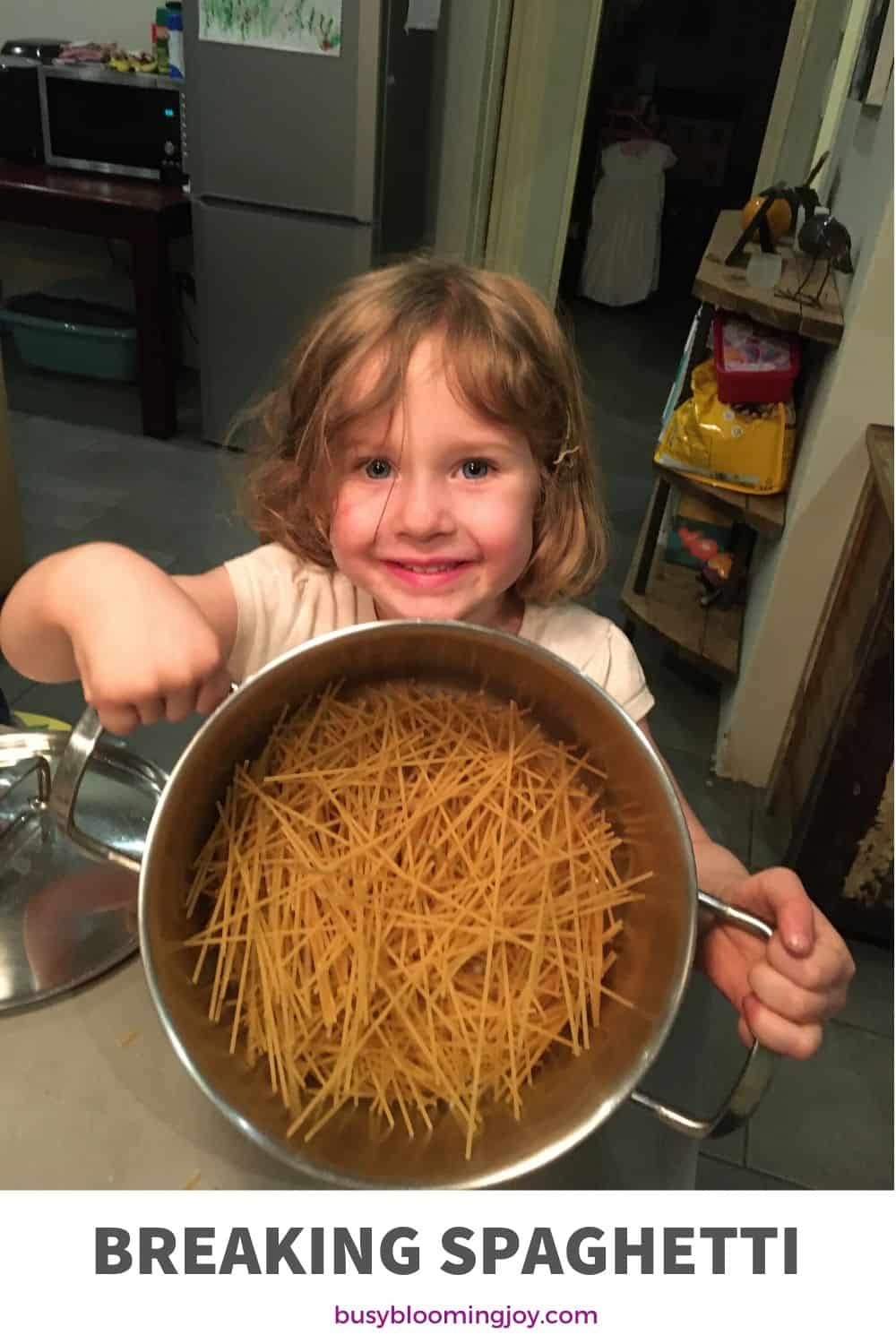
Stirring, pouring, spreading, kneading, rolling and any other cooking assistance is a fine motor activity goldmine your toddler or preschooler.
Simple tasks like spreading butter on toast, stirring batter or rolling out dough work multiple hand and wrist muscle groups at once.
Or breaking spaghetti up to fit it into the sauce pan, as pictured above.
And the payoff of eating something they helped make makes it all the more worthwhile.
Sock Matching & Folding
Tip out a pile of clean socks and let your little one match them into pairs. For older preschoolers, show them how to fold and roll each pair together.
Pinching, rolling and folding all work the small hand muscles brilliantly — and it’s one of those rare activities that is genuinely useful at the same time.
Toddlers take enormous pride in helping with real tasks.
For more everyday activities that sneak in fine motor practice, our 1 year old development activities post covers fine motor milestones and activities in detail.
Tips for Fine Motor Activities with Toddlers
A few things that’ll make fine motor practice more effective — and more fun:
- Little and often is better than long sessions. Fine motor work is tiring for small hands. Short, regular bursts are more effective than one long activity.
- Follow their lead. If your 2 year old wants to just squish the playdough rather than roll it into balls, that’s fine. The squishing is working those muscles too.
- Don’t correct the grip. At this age, experimenting with how to hold things is part of the process. The right grip will come with time and practice.
- Make it playful. Fine motor activities should feel like play, not exercise. If it stops being fun, put it away and try something else.
- Everyday tasks count. Turning a door handle, pouring their own drink, peeling a piece of fruit — it all adds up. Look for opportunities throughout the day rather than only in dedicated activity time.
- Celebrate effort, not outcome. The scruffy threading, the wonky cutting, the uneven sticker placement — all of it is brilliant fine motor practice. Praise the doing, not the result.
Which Fine Motor Activity Will You Try First?
Whether you’ve got a 1 year old just discovering their fingers or a preschooler getting ready for school — there’s something here for every stage.
The best fine motor activities are the ones your little one actually wants to do. So dip in, try a few things, and see what captures their attention.
And remember — those busy little hands are working hard every single day. Every bit of play counts.
Save this post for the next time you need a quick fine motor activity idea — you’ll be glad you did.
Time to move, jump, and explore with these sensory and gross motor ideas: