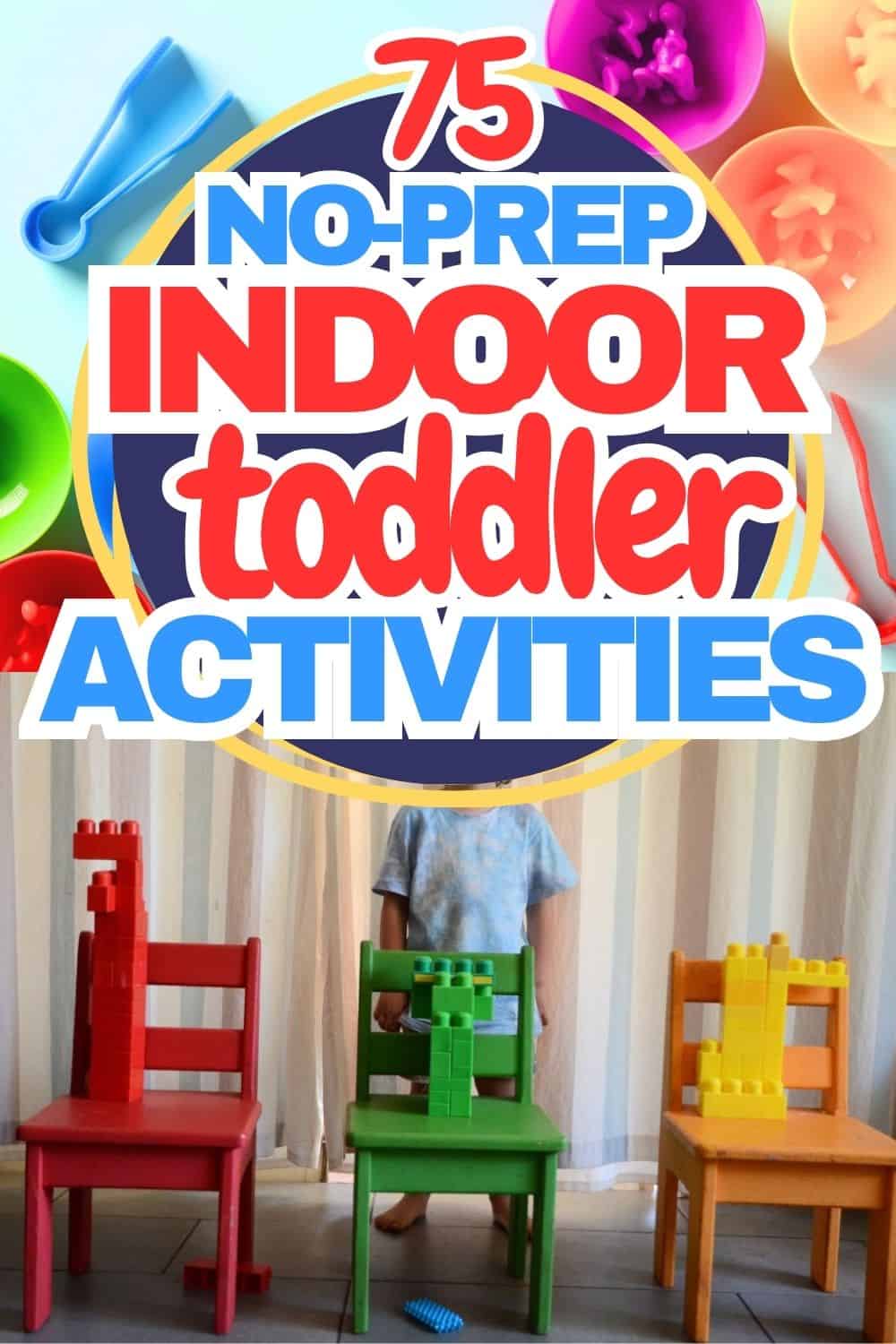

Another rainy day…
You’re stuck inside, your toddler is bouncing off the walls, and you’ve already exhausted your usual bag of tricks before 9am.
Sound familiar?
Whether it’s a grey Tuesday in November, a sick day at home, or just one of those days when getting outside just isn’t happening, you absolutely need this list of indoor activities for toddlers up your sleeve!
And that’s exactly what this is.
Here you’ll find the best indoor activities for toddlers and preschoolers aged 1, 2 and 3 years old. Most will also keep a busy 4 or 5 year old engaged too.
From active movement games to calm, quiet activities for when you desperately need five minutes — and everything in between.
Sensory play, creative activities, simple learning games and more.
The best bit? You won’t need to spend a penny or spend hours prepping. Almost all of these toddler activities use things you already have at home. And mess is kept firmly to a minimum!
Save this post for the next rainy day — you’ll be glad you did.
This post contains affiliate links. If you click on one and make a purchase, we may receive a commission at no extra cost to you.
Quiet Indoor Activities for Toddlers (Calm & Mess-Free)
Sometimes you need the opposite of bouncing off the walls.
These quiet, mess-free indoor activities are perfect for when you need your little one to focus independently for a bit — whether you’re on a work call, feeding a newborn, or just desperately need a cup of tea while it’s still hot.
We have a whole post dedicated to mess-free toddler activities — but here are the greatest hits.
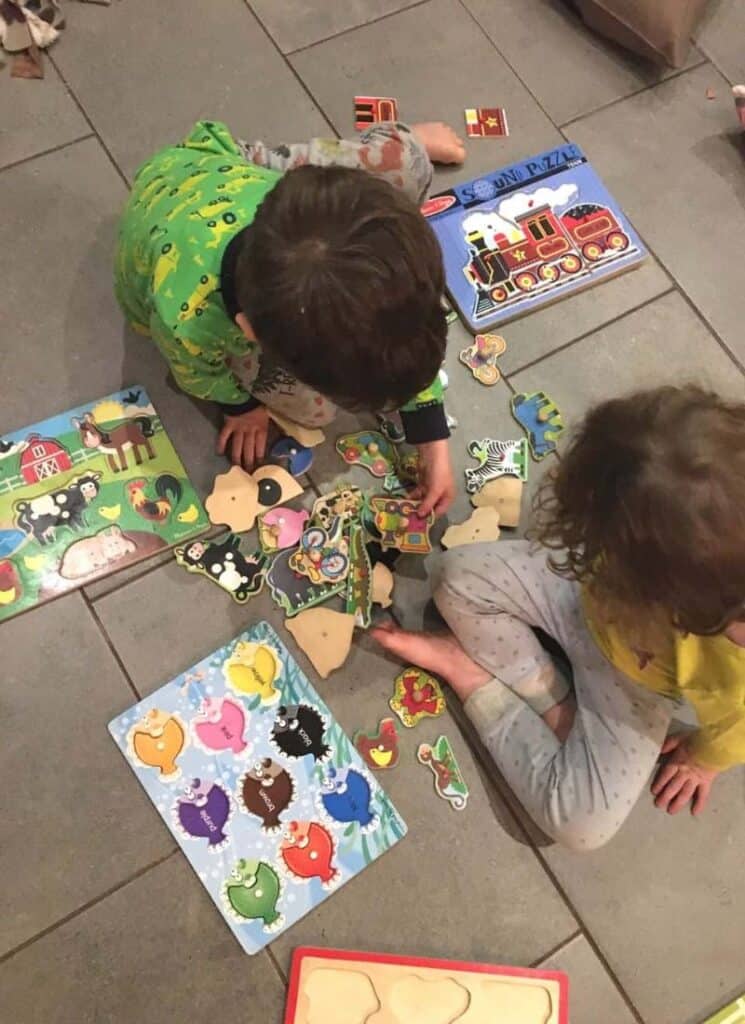
Puzzle Mix-Up
Take two or three of those simple chunky puzzles that have become too easy and tip all the pieces out together.
Now your kids have to sort them and put each puzzle back together separately. Suddenly the easy puzzles are a real challenge again.
Brilliant for problem-solving and usually buys a solid 15-20 minutes of independent play.
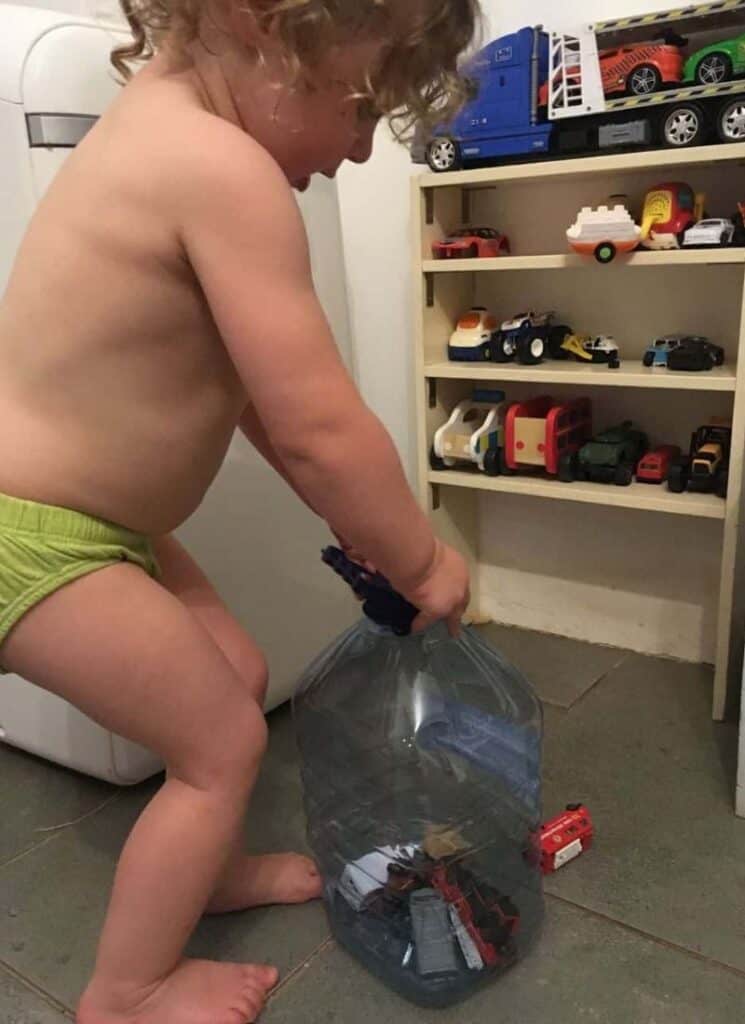
Posting Toys into a Bottle
Find a large plastic bottle with a neck just wide enough for a small toy car or building block to fit through.
Challenge your little one to post them all in — and then shake them back out again. Deceptively simple, endlessly satisfying.
This one can genuinely last 30 minutes with a busy 2 year old!
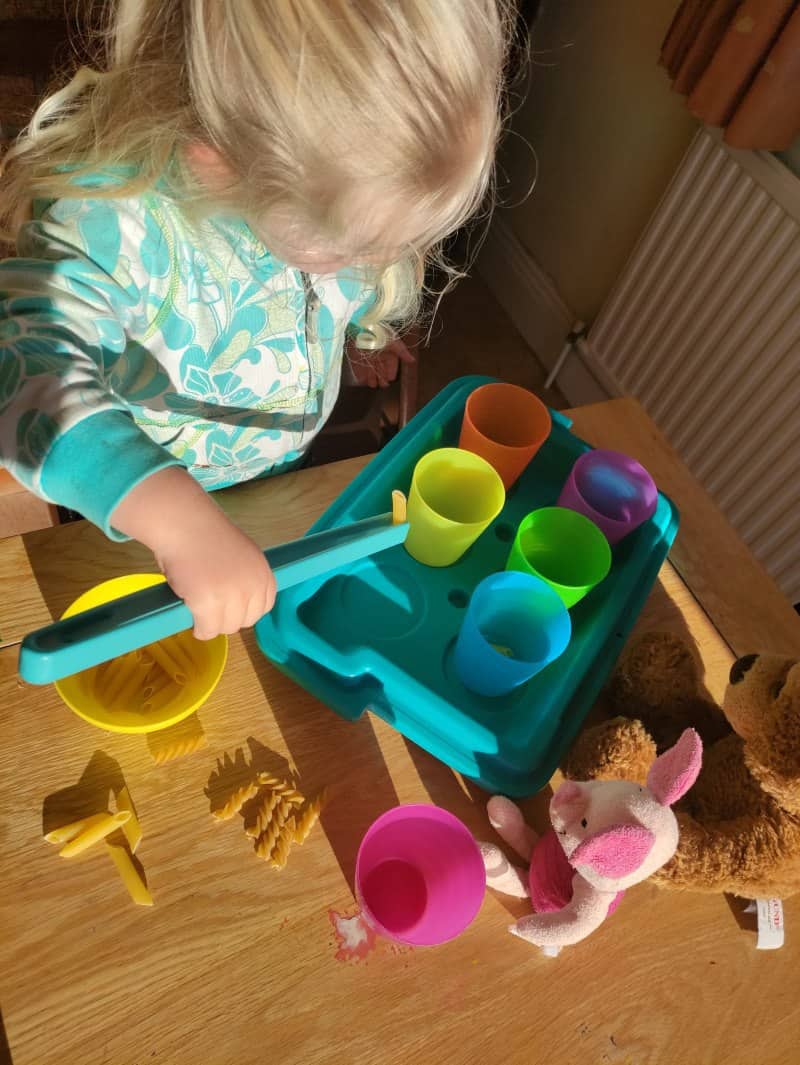
Dry Pasta Scooping & Sorting
A bowl of dried pasta shapes, a muffin tin or ice cube tray, and a set of measuring spoons. That’s it.
Younger toddlers will happily scoop and pour; older preschoolers can sort by shape or colour. Add salad tongs or plastic tweezers for an extra fine motor challenge.
Surprisingly absorbing.
Tupperware Exploration
Open the dreaded Tupperware drawer and let your little one loose.
Matching lids to containers, stacking, nesting, filling and emptying — it’s all genuinely educational play dressed up as chaos.
Set them up at the kitchen table while you cook and everyone wins.
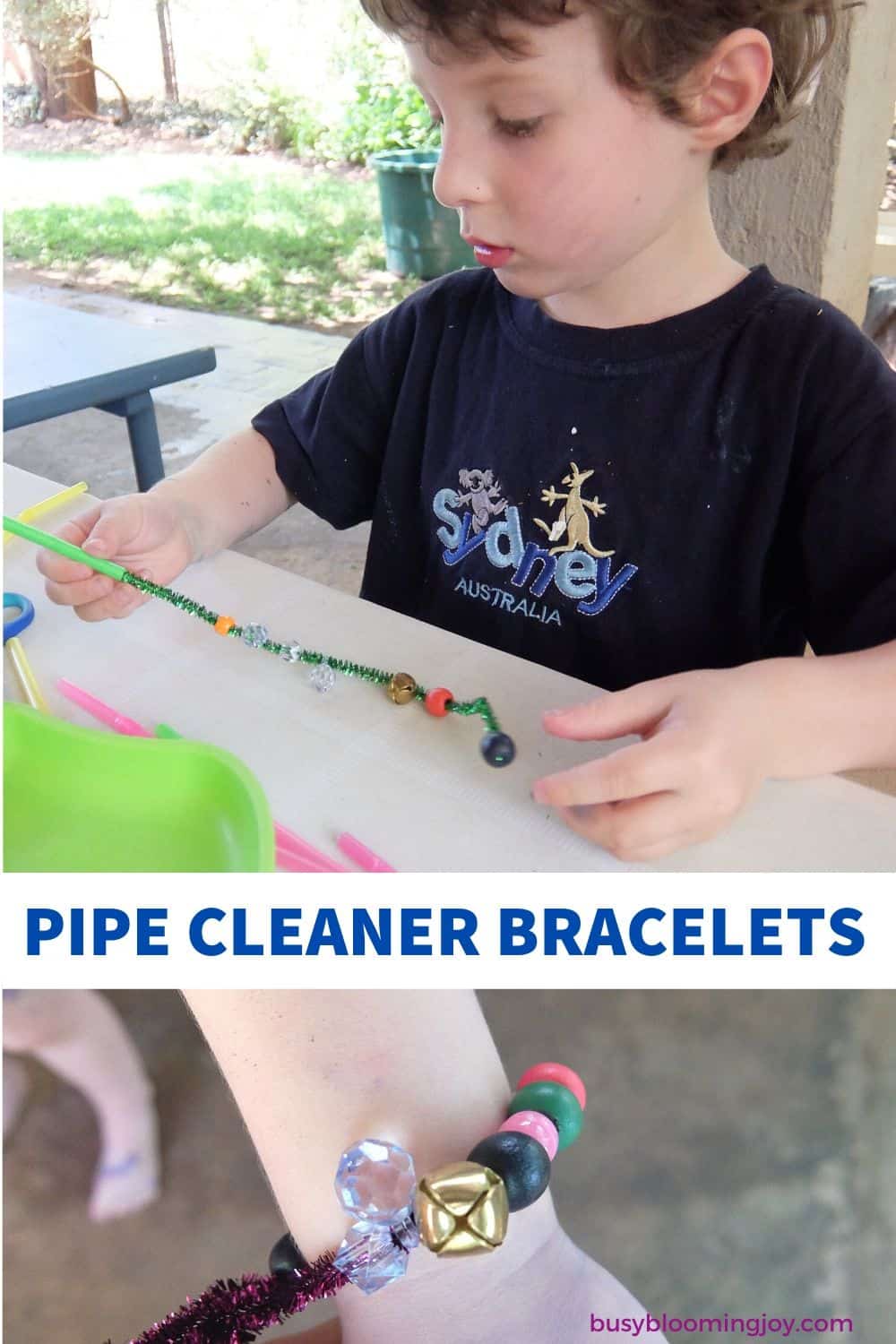
Threading & Lacing
Thread large wooden beads onto a shoelace, or use dried pasta tubes threaded onto a piece of string.
A brilliant quiet activity that really challenges little fingers and builds concentration.
Older preschoolers can try to follow a colour pattern; younger ones will be perfectly happy just threading away at their own pace.
Blowing Pompoms with Straws
Blowing through a straw to move a pompom across the floor or table is trickier than it sounds! Great for breath control, concentration and hand-eye coordination.
Smaller pompoms are easier to move; larger ones are more of a challenge.
Hide and Seek the Toy
Hide a selection of favourite toys or stuffed animals around the room or the house and send your toddler off to find them.
For younger 1 year olds, make them easy to spot. For older preschoolers, give clues — warmer, colder — or simple descriptive hints.
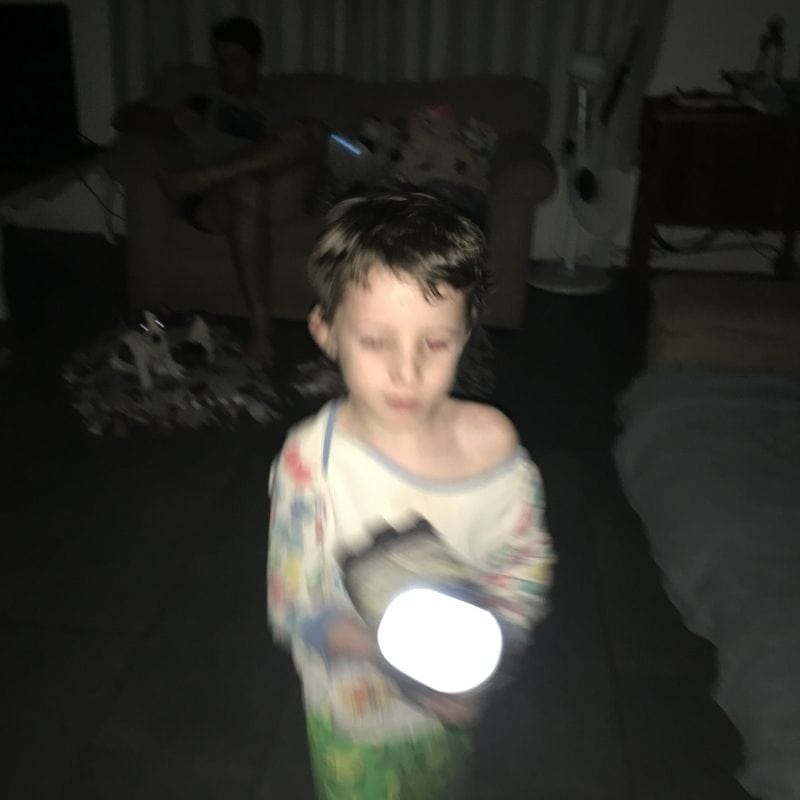
This is also fun to do in the dark with a torch! My two loved this as an after bath activity – see pictured.
A brilliant way to work on listening and comprehension skills.
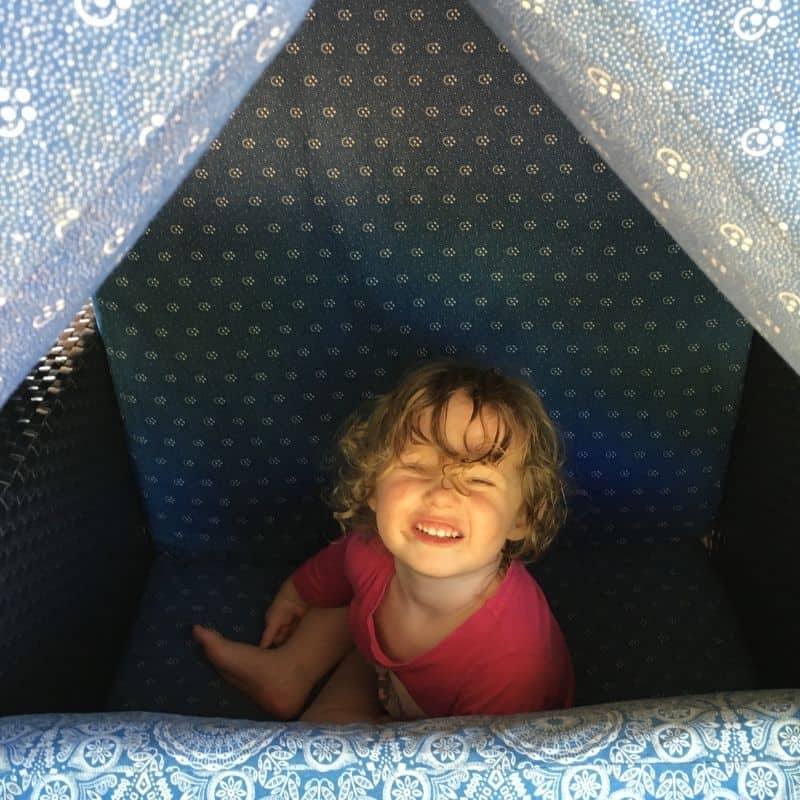
Den Building
Sofa cushions, chairs, blankets and sheets.
Let your little one build a den and then make it cosy inside with pillows, books and a torch.
If you’re very lucky, the den will keep your 3 year old occupied long enough for you to sit nearby and pretend to be somewhere else entirely.
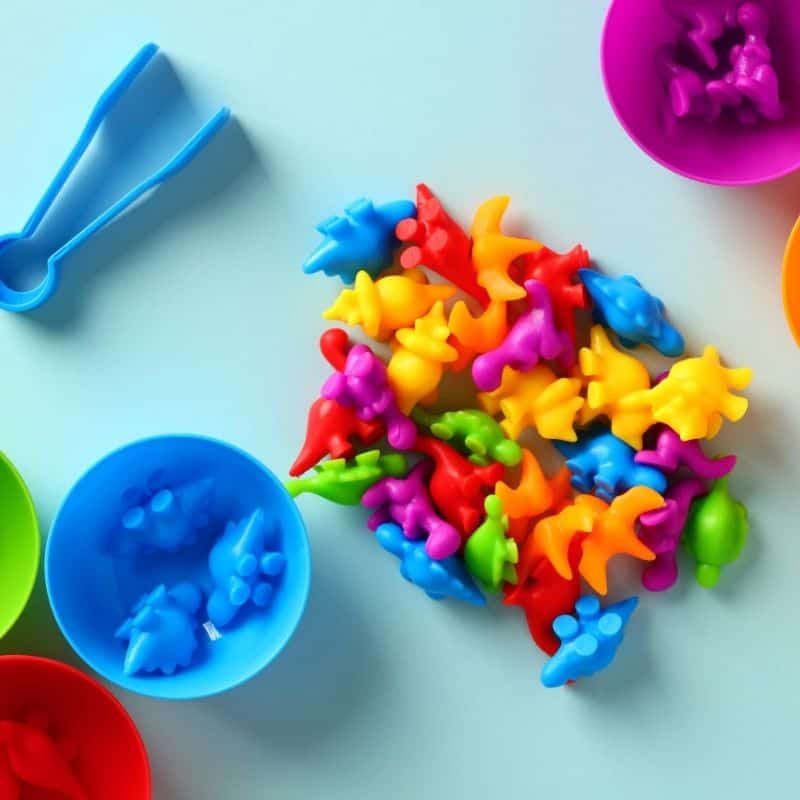
Sorting by Colour With Toddler Tweezers
For this you need a variety of small objects in different colors – bag of pompoms are perfect for this – plus some coloured bowls, muffin liners or construction paper will do just as well.
Supply your child some plastic tweezers and the challenge is to pick up each toy or pompom and place it in the matching colour pot or on the colored construction paper.
But no sweat if your toddler is content to simply move them around in any way they want!
Such fun fine motor practice.
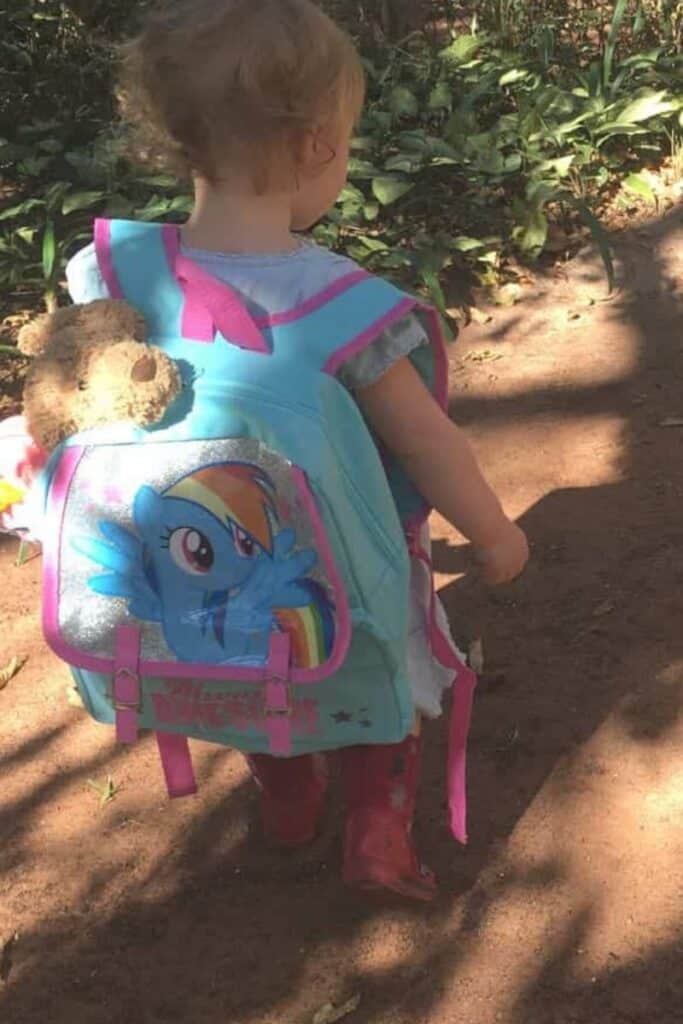
Pack A Bag (Then Unpack It!)
Give your toddler a carry on bag with wheels, rucksack or even a box and a collection of objects to pack — soft toys, books, scarves, kitchen utensils.
Let them fill it up, carry it somewhere, unpack it and start again. Simple, repetitive and genuinely absorbing for little ones who love order and ritual.
Packing and unpacking builds fine motor skills, spatial awareness and a satisfying sense of control over their environment.
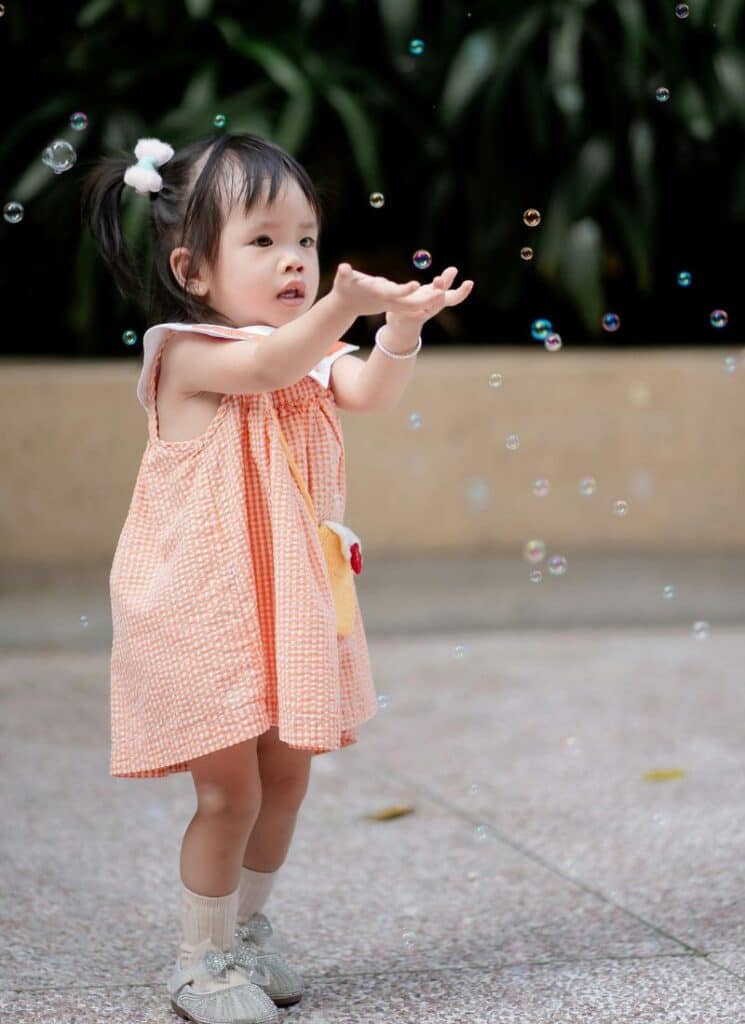
Bubble Catching
An automatic bubble machine is brilliant for this, but the old-fashioned way works just as well.
Blow bubbles and encourage your toddler to chase and pop them. Great for whole-body movement, balance and coordination.
Pretty much every little kid on the planet loves bubbles.
Discovery Box
Fill a small basket with a collection of interesting objects the kids haven’t seen before — a silicon kitchen utensil, a small lidded box, a piece of ribbon, a pine cone.
No instructions needed. Just hand it to your little one and let them explore. Touching, turning, banging and investigating each object is pure sensory and cognitive play for little ones.
This can keep a young toddler absorbed for a surprisingly long time!
Find loads more calm, screen-free ideas in our full round-up of 75 mess-free toddler activities at home.
Active Indoor Activities for Toddlers (Movement & Gross Motor)
They may be little but they have big energy!
Toddlers and preschoolers need to move — a lot. These active indoor activities are perfect for burning off energy when you’re stuck inside.
No garden required!
Most need nothing more than a bit of floor space and a balloon or a roll of painter’s tape.
We’ve got a bumper list of over 65 gross motor activities for toddlers if you want the full collection — but here are some firm favourites to get you started.
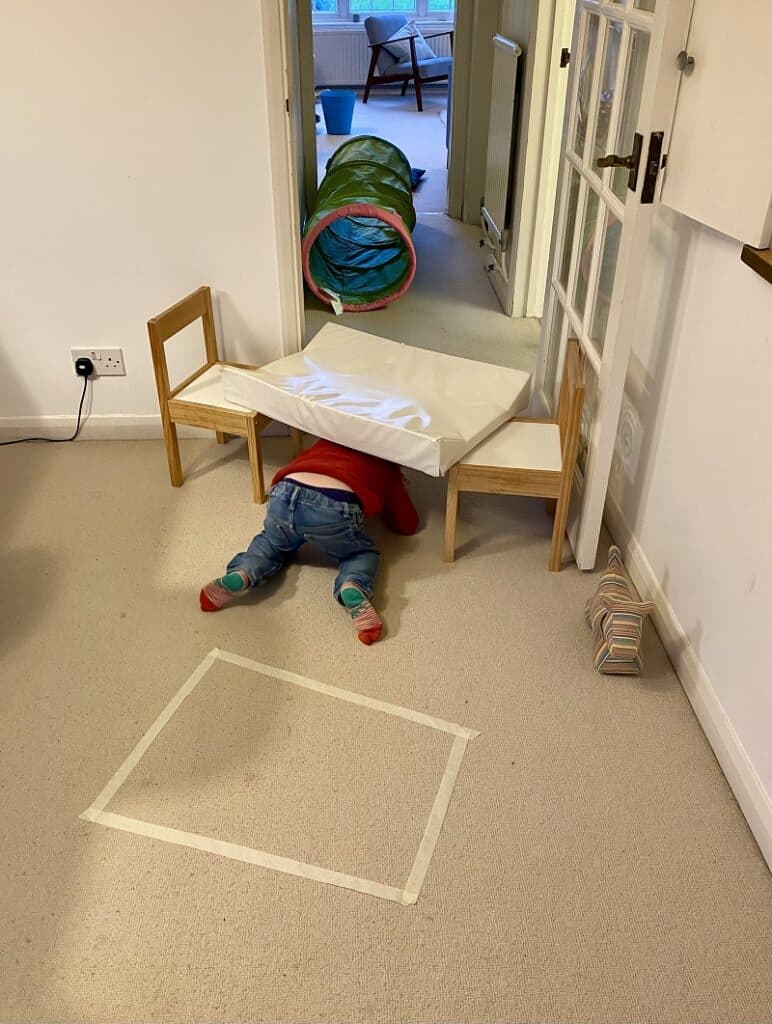
Obstacle Course
The classic that never gets old.
Use sofa cushions, cardboard boxes, blankets over chairs and painter’s tape on the floor to create a course through your living room. Include crawling, jumping, hopping and balancing challenges.
Get your 2 or 3 year old involved in building it — that’s half the fun. Change it up each time to keep things fresh.
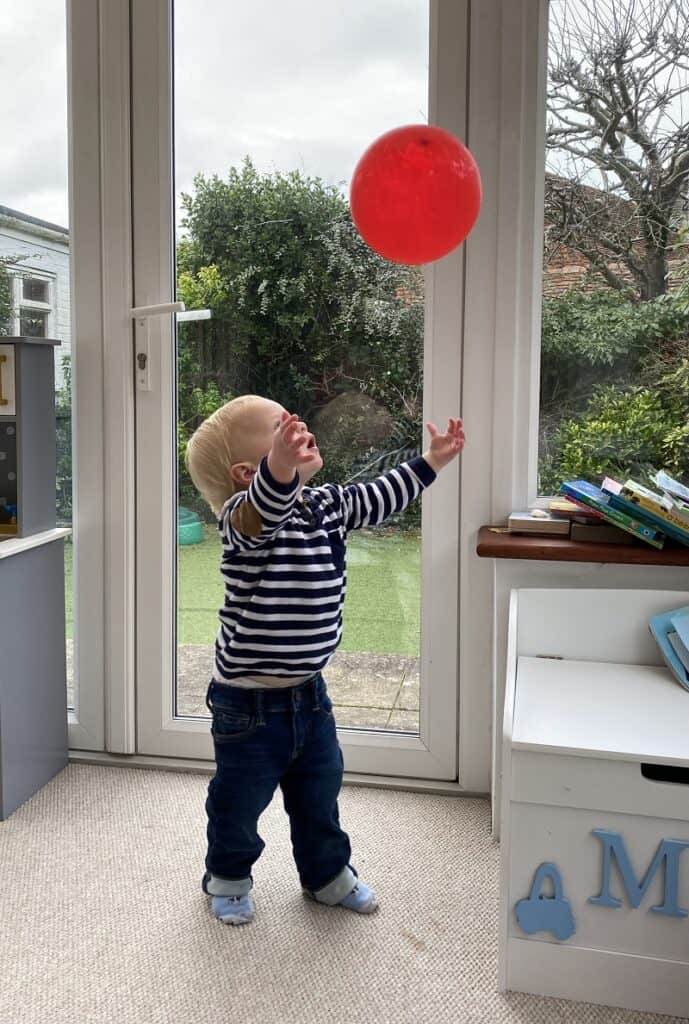
Keep the Balloon in the Air
Blow up a balloon and challenge your little one to keep it off the ground.
Simple, endlessly entertaining, and guaranteed to have them shrieking with laughter. Great for developing hand-eye coordination and arm strength.
Always keep a stash of balloons in the cupboard — they’re fail-safe entertainment!
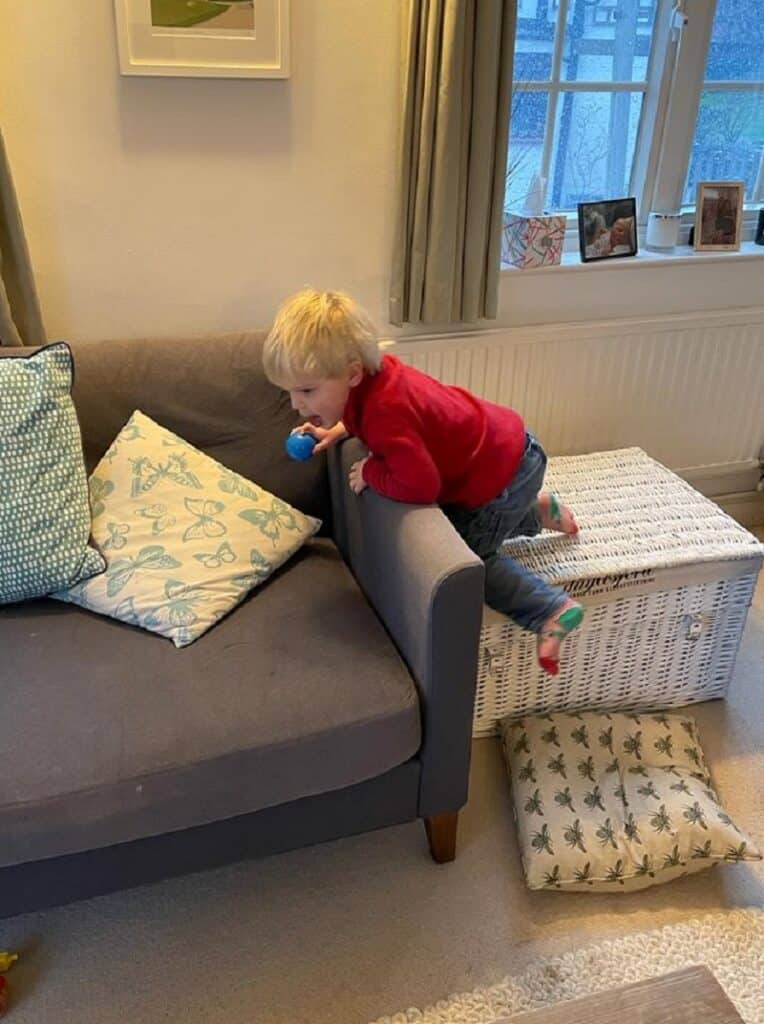
The Floor is Lava
An imagination-fuelled favourite. The floor is made of lava — so they can’t touch it!
Use cushions, paper plates, pieces of cardboard or furniture to get around the room. Works on balance, coordination, body awareness and problem-solving all at once.
Endless fun for toddlers, preschoolers and older kids too. My 10 year old still loves this simple game!
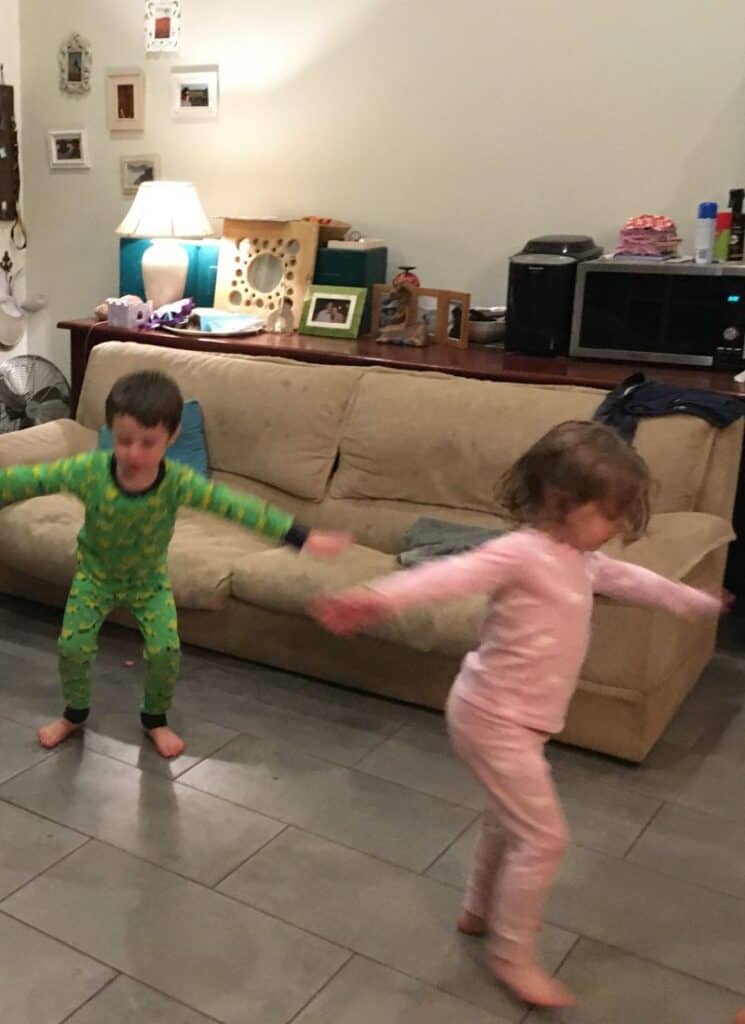
Dance Party
Put on some tunes and go for it. The simplest, most effective energy-burner there is.
1 year olds attempting to dance is also one of the greatest things you will ever witness!
No further explanation needed.
Indoor Hopscotch
Use painter’s tape to make a hopscotch grid on the floor.
Count along with your little one as they jump from square to square — brilliant for number recognition as well as balance and coordination.
Younger 1 year olds may just enjoy jumping from square to square without the full game rules, which is absolutely fine.
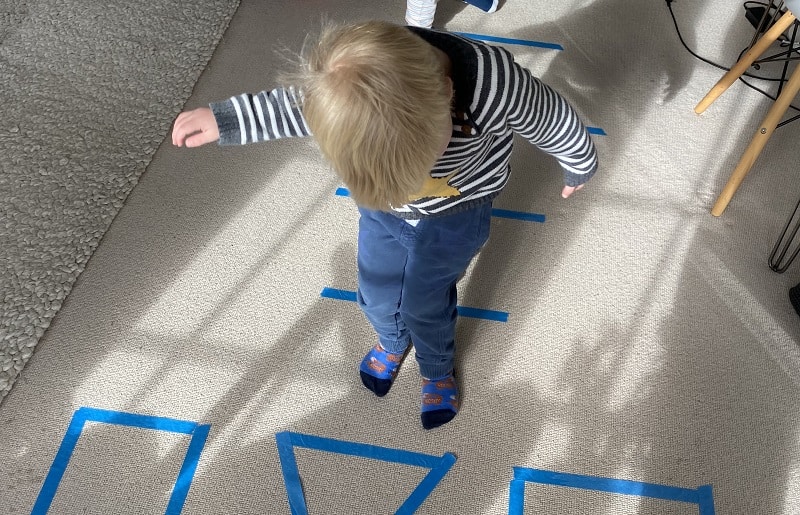
Jumping Over Taped Lines Or Into Shapes
Tape a series of lines on the floor like a ladder and challenge your toddler to jump from one to the next.
Start simple for younger ones and make the gaps wider as they get more confident.
Add shapes into the mix or tape numbers to the floor to add a little bit of learning.
A roll of painter’s tape is genuinely one of the most useful things to have in the house with a young child.
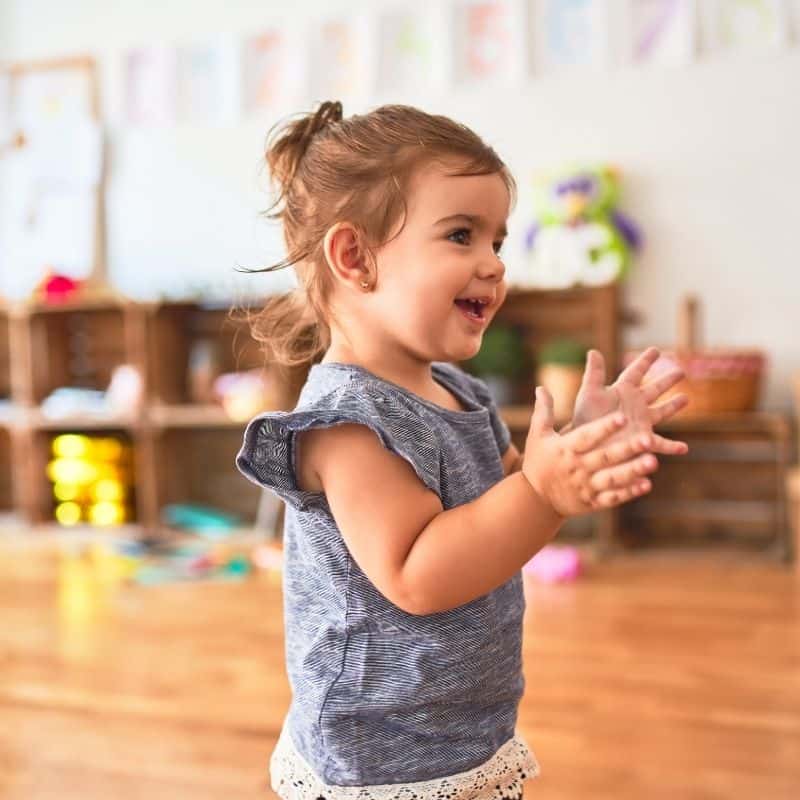
Simon Says
A classic gross motor game that also works on listening skills — quite the challenge with a 2 year old!
Simon says jump, Simon says hop on one leg, Simon says do five star jumps. Let your preschooler take a turn as Simon too.
Expect some very creative instructions.
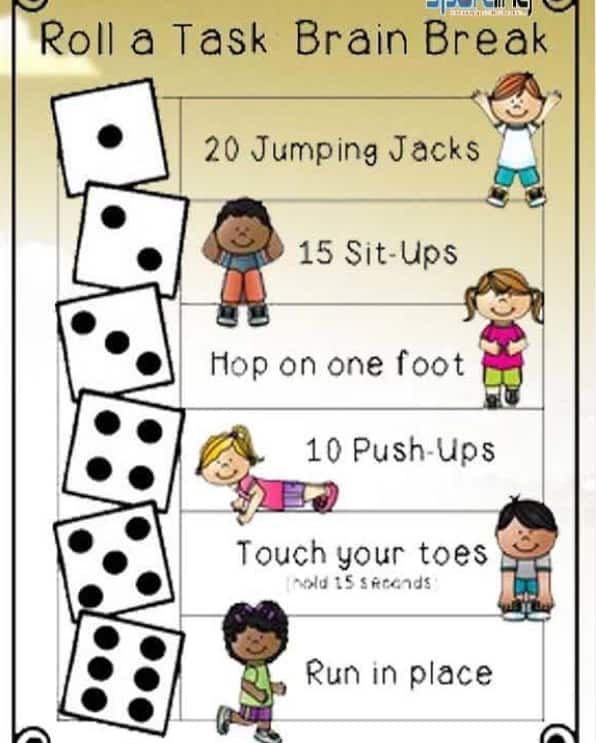
Roll-A-Task Activity
This roll-a-task activity makes for such a fun and interactive game and a great way to wear little ones out. It’ll work best for young toddlers that are confident walkers.
The list pictured is ideal for older toddlers and preschoolers. Instead, choose 6 physical activities your little one is capable of doing. Write each one down and number them.
Then simply roll the dice and try the movement. This would make for an amazing indoor activity on a rainy day to get your 1 year olds burning energy.
Indoor Snowball Fight
Scrunch up balls of newspaper or pair up socks as snowballs.
Pull out the furniture to make hiding spots, build a sofa cushion fort, and let battle commence. A brilliant energy-burner and great for throwing and aiming skills.
Works year-round — no actual snow required.
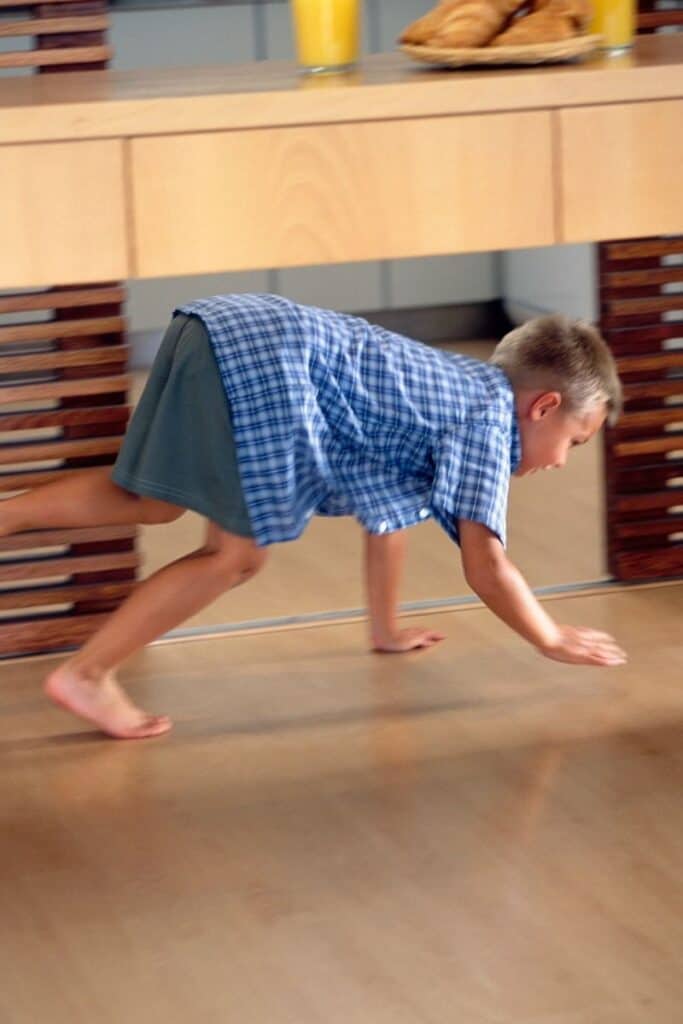
Move Like an Animal
Call out an animal and challenge your little kid to move like it around the room.
A hopping bunny, a stomping elephant, a slithering snake, a galloping horse. The sillier the better.
Great for imagination, whole-body movement and burning energy — and genuinely hilarious to watch.
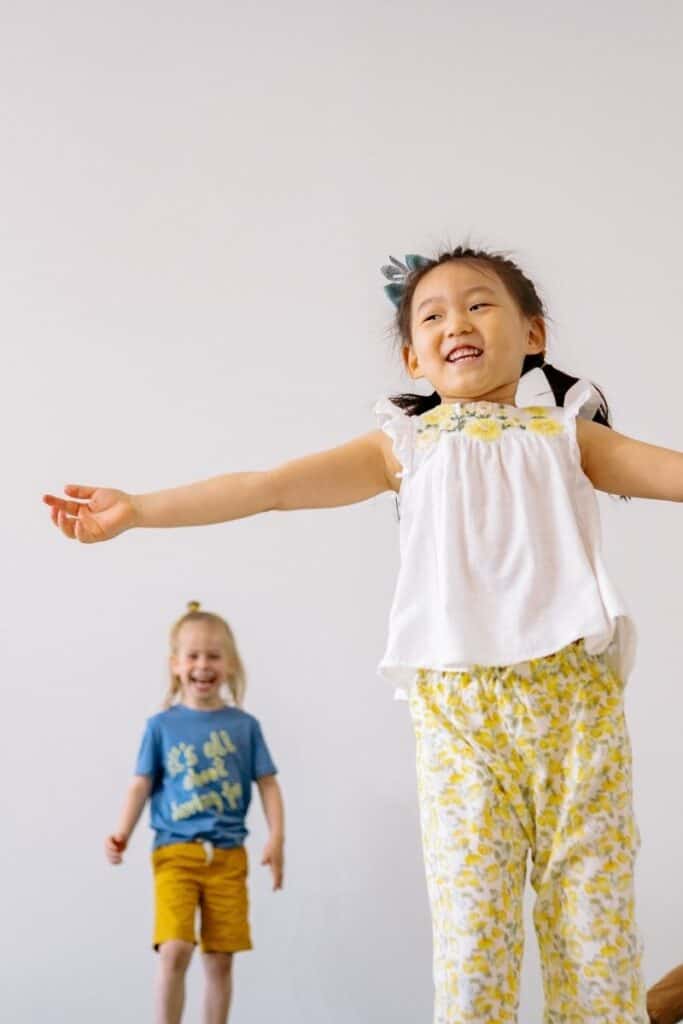
Musical Statues
Put on some music and have a good dance. When the music stops, everyone freezes.
The challenge of holding completely still is surprisingly tricky for 2 and 3 year olds — and the giggling when someone wobbles is the best part.
No eliminations needed with little ones — just let everyone keep playing and keep the fun going.
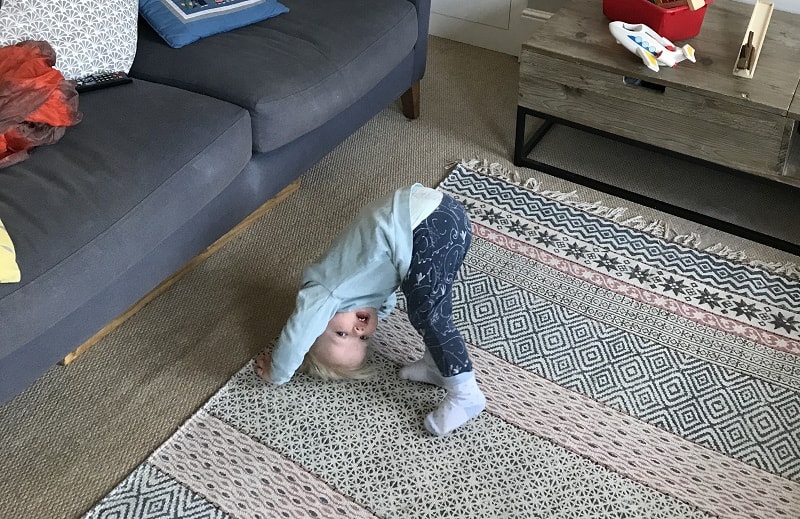
Yoga Moves
Simple yoga poses are brilliant for preschoolers — and there are some fantastic kids’ yoga videos on YouTube to follow along with.
Try easy poses like downward dog, cat-cow, tree pose and child’s pose. Little ones love the animal-themed ones especially.
Great for body awareness, balance, flexibility and a bit of calm focus.
Balloon Tennis
Make simple bats by taping a paper plate to a wooden spoon and blow up a balloon.
Hit the balloon back and forth without letting it touch the ground.
Brilliant for hand-eye coordination and keeps even reluctant movers engaged.
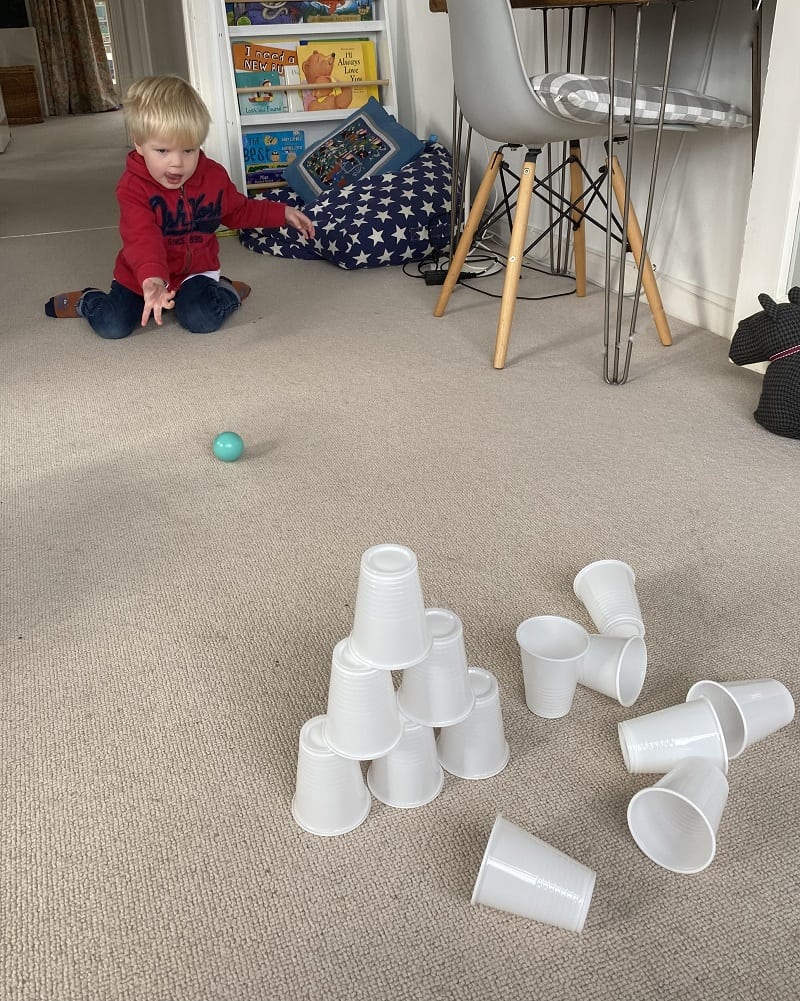
Skittles
Line up empty toilet rolls, plastic bottles or paper cups in a triangle at one end of the room.
Mark a line on the floor with tape and challenge your 3 year old to roll a soft ball and knock them all down.
Reset and go again — kids will want to do this over and over. Great for aim, turn-taking and counting the fallen skittles.
Pillow Jumping
Lay a line of cushions and pillows on the floor and challenge your little one to jump from one to the next without touching the floor.
Space them close together for younger ones and further apart as they build confidence.
Works brilliantly alongside the floor is lava — combine the two for maximum excitement.
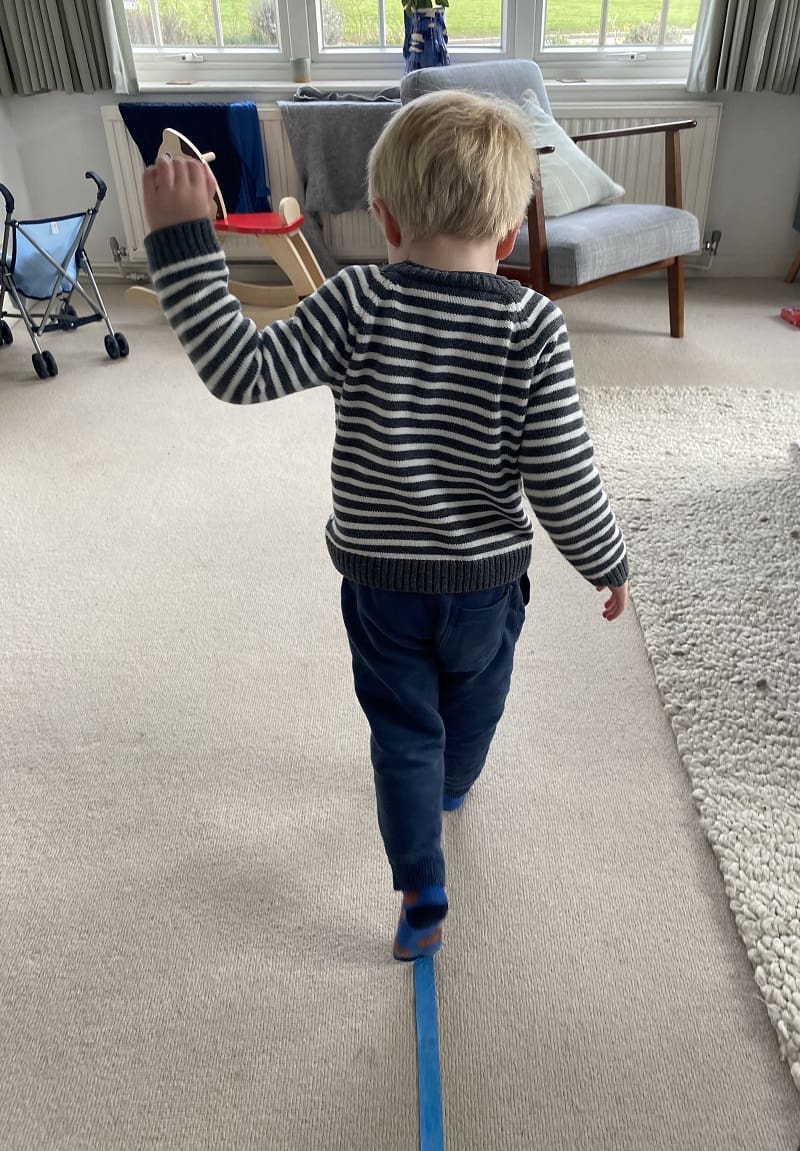
Balance Beam
Get out that masking/painter’s tape again and tape a balance beam to the floor for your toddler to walk along. This is a fun and challenging gross motor activity for 1 and 2 year olds.
Make it trickier for 3 year olds – get them to stop somewhere along the beam to bend down and pick something up, hop on one leg or go backwards.
Beanbag Balance Race
Balance a beanbag (or a pair of rolled-up socks) on your toddler’s head and challenge them to walk across the room without dropping it.
Once they’ve mastered that, up the ante and challenge them to walk along the balance bean while balancing the beanbag.
Great for core strength, posture and concentration — and the look of sheer focus on a 2 year old’s face is wonderful.
For the full collection of active indoor games and movement activities, head over to our 65 gross motor activities for toddlers post — it’s broken down by age too.
Sensory Indoor Activities for Toddlers
Sensory play is one of the most valuable things you can offer a young child at home.
It supports cognitive development, language skills, fine and gross motor skills and creativity — all while keeping little ones thoroughly engaged. And it doesn’t have to mean a huge mess.
These indoor sensory activities range from completely mess-free to slightly adventurous — you pick your moment.
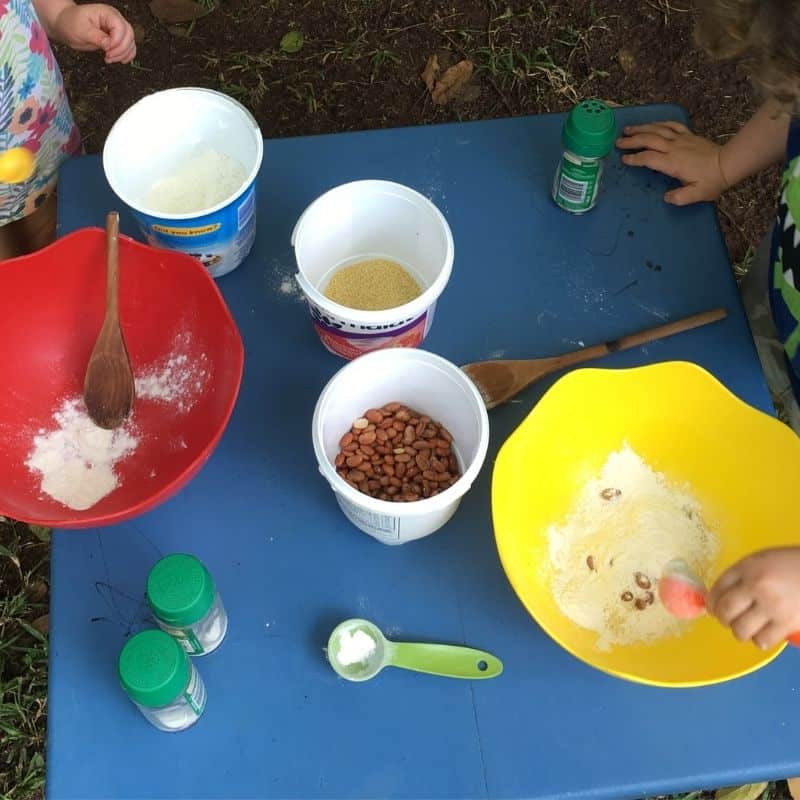
Pretend Cooking (With or Without Real Ingredients!)
Set up a simple pretend kitchen using some simple kitchen utensils — wooden spoons, plastic bowls, a saucepan, some dried rice or pasta or flour if you don’t mind a little mess.
Let your 2 or 3 year old cook, stir, pour and serve to their heart’s content. Take up a seat and order something delicious.
Pretend play is one of the richest activities for language, creativity and social development — and is so engaging for little ones.
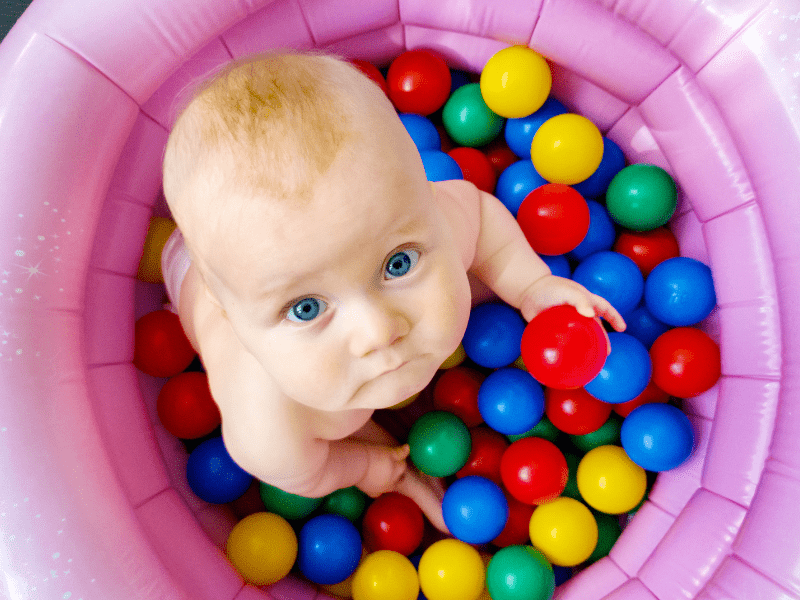
DIY Ball Pit
A large cardboard box or paddling pool filled with colourful plastic balls makes a brilliant indoor ball pit.
Toddlers will find endless ways to play — throwing, sorting, burying toys, rolling around in them…
Set it up in the living room on a rainy day and it’ll keep them busy for a surprisingly long time.
Sensory Bottles
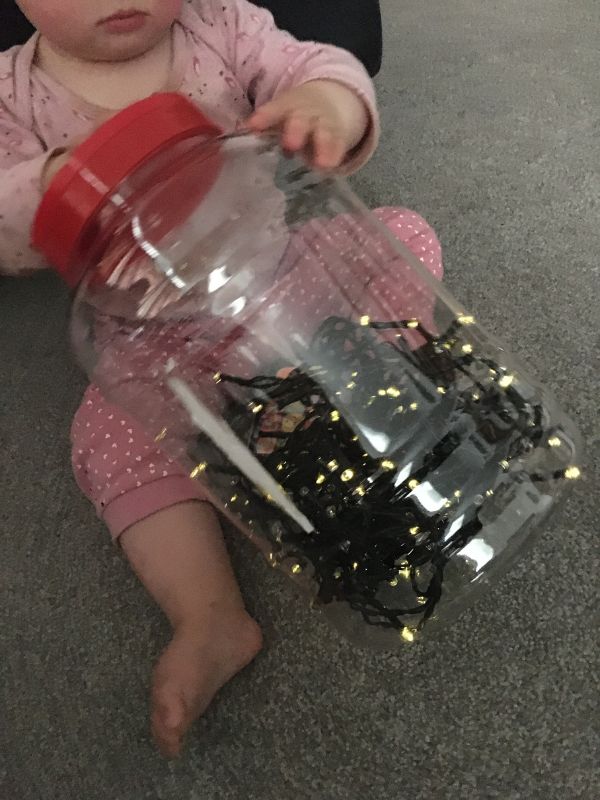
A clear plastic bottle filled with some interesting items can provide endless entertainment and sensory experience to babies, toddlers and preschoolers.
Pictured are some battery-operated twinkly lights in a giant plastic bottle (that contained craft supplies at one point).
You can also try filling a clean plastic bottle with water, a few drops of food colouring, glitter and a little baby oil. Seal the lid tightly with glue.
Little ones can roll it, shake it and watch the contents swirl — calming, mesmerising and completely mess-free.
Make a few different ones with different contents for variety.
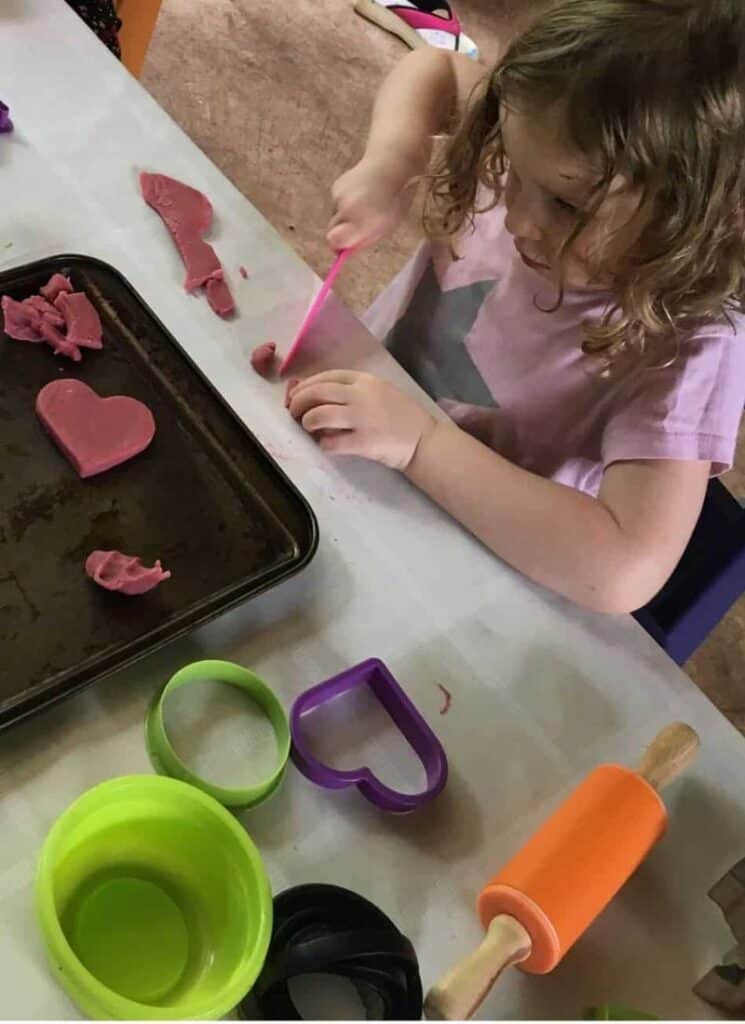
“Bake” with Playdough
Playdough is a toddler staple for good reason — it’s endlessly versatile and deeply satisfying to squish, roll and poke.
Add tools — a plastic knife, a rolling pin, cookie cutters, lolly sticks — and let your little one create. Make your own with flour, salt, water and food colouring for a cheap and easy batch.
A quiet, absorbing activity that works brilliantly for all ages from 18 months upwards.
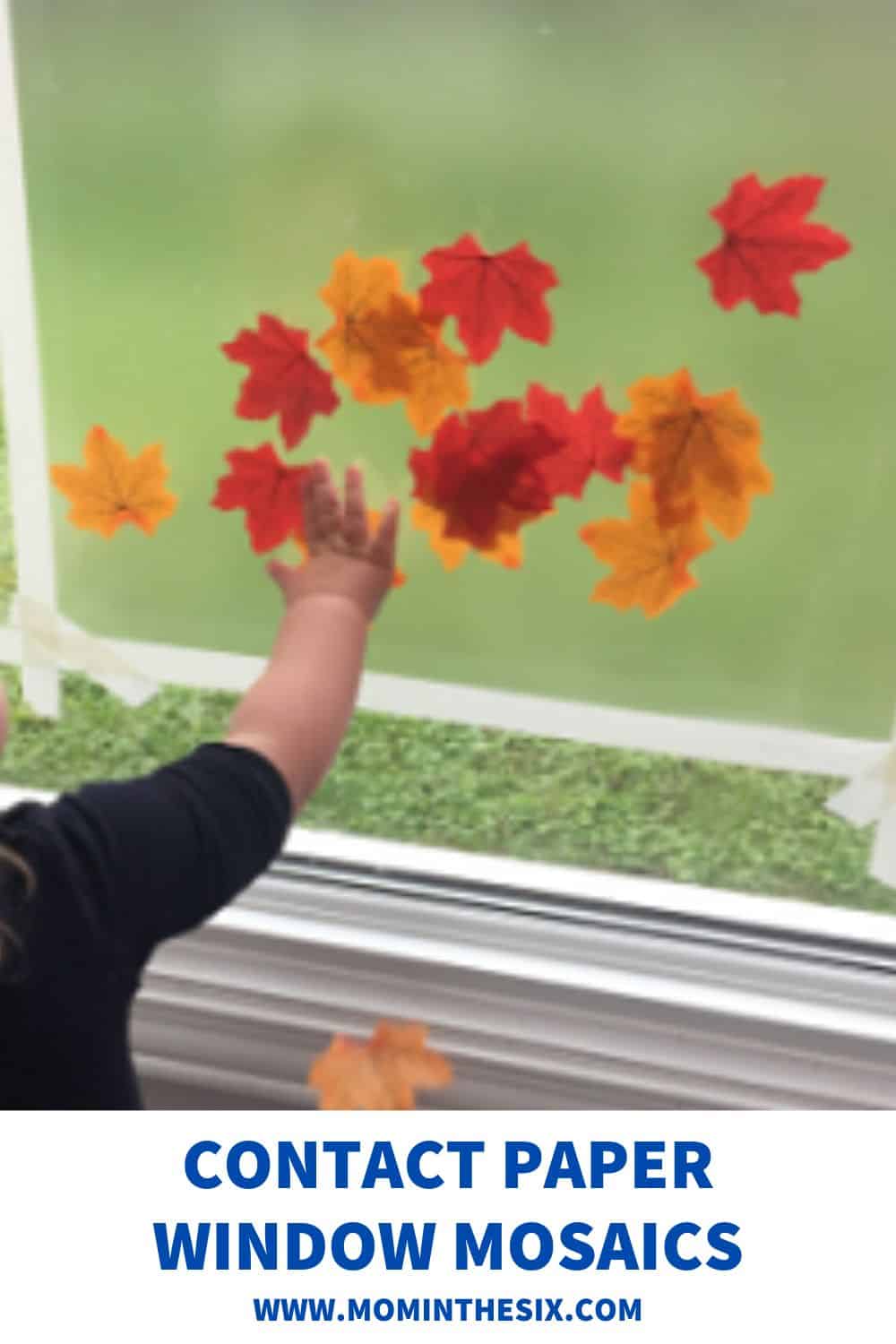
Contact Paper Collage
Tape a sheet of contact paper sticky-side out to the wall or a low window.
Give your toddler a selection of safe materials to stick on — tissue paper, feathers, dried leaves, sequins, cotton wool. They’ll be utterly absorbed.
Seal with another sheet of contact paper at the end to make a keepsake.
Pictured above a fall-inspired window mosaic from Mom In The Six which uses faux leaves.
Dry Rice Sensory Bin
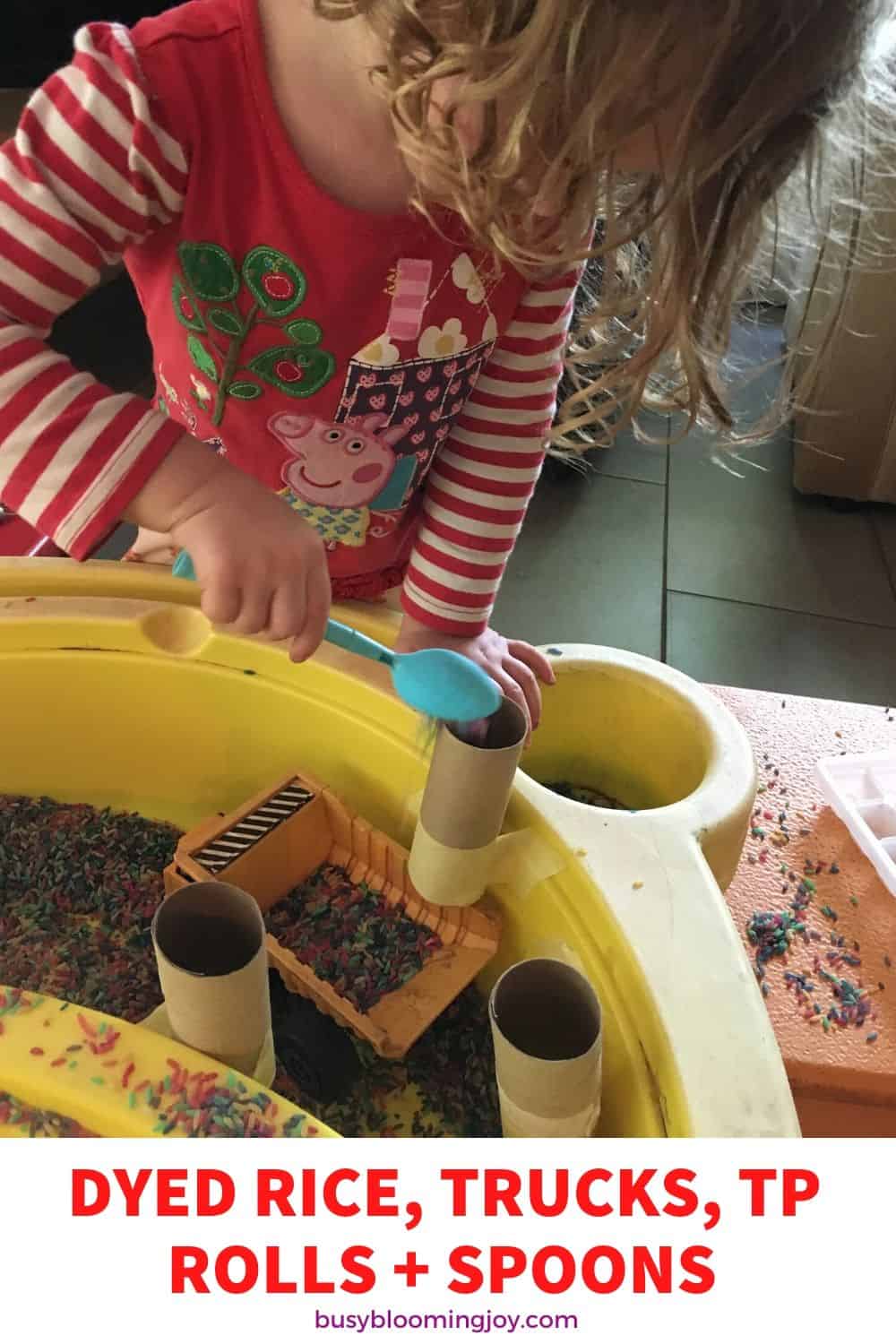
Fill a large shallow tub or roasting tin with dry rice then add scoops, cups and small toys and let your little one explore freely.
You can also add some cardboard tubes and funnels as pictured above – endless fun for a 2, 3 or 4 year old!
Plastic Egg Play
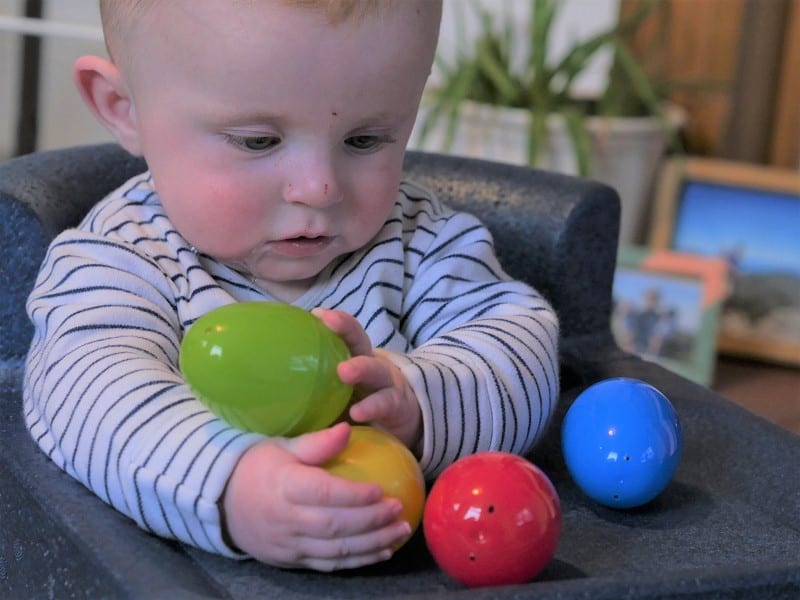
Plastic Easter eggs aren’t just for springtime!
Fill them with rice or dried pasta and seal them to make rattles. Or use them for sorting by colour, hiding small toys inside, making towers with the halves, or scooping with kitchen utensils.
A fun homemade open-ended toy that a 1 or 2 year old can use in a hundred different ways.
We have more infant Easter activities here.
Water Play at the Sink
Stand your little one on a step at the kitchen sink with a little warm water, some plastic cups, spoons and small containers.
Pouring, filling, emptying and splashing — simple water play is deeply satisfying for toddlers and brilliant for early maths concepts like full, empty, more and less.
Put a towel down and embrace the minor splashes.
Blind Textured Walk (Blindfold Optional!)
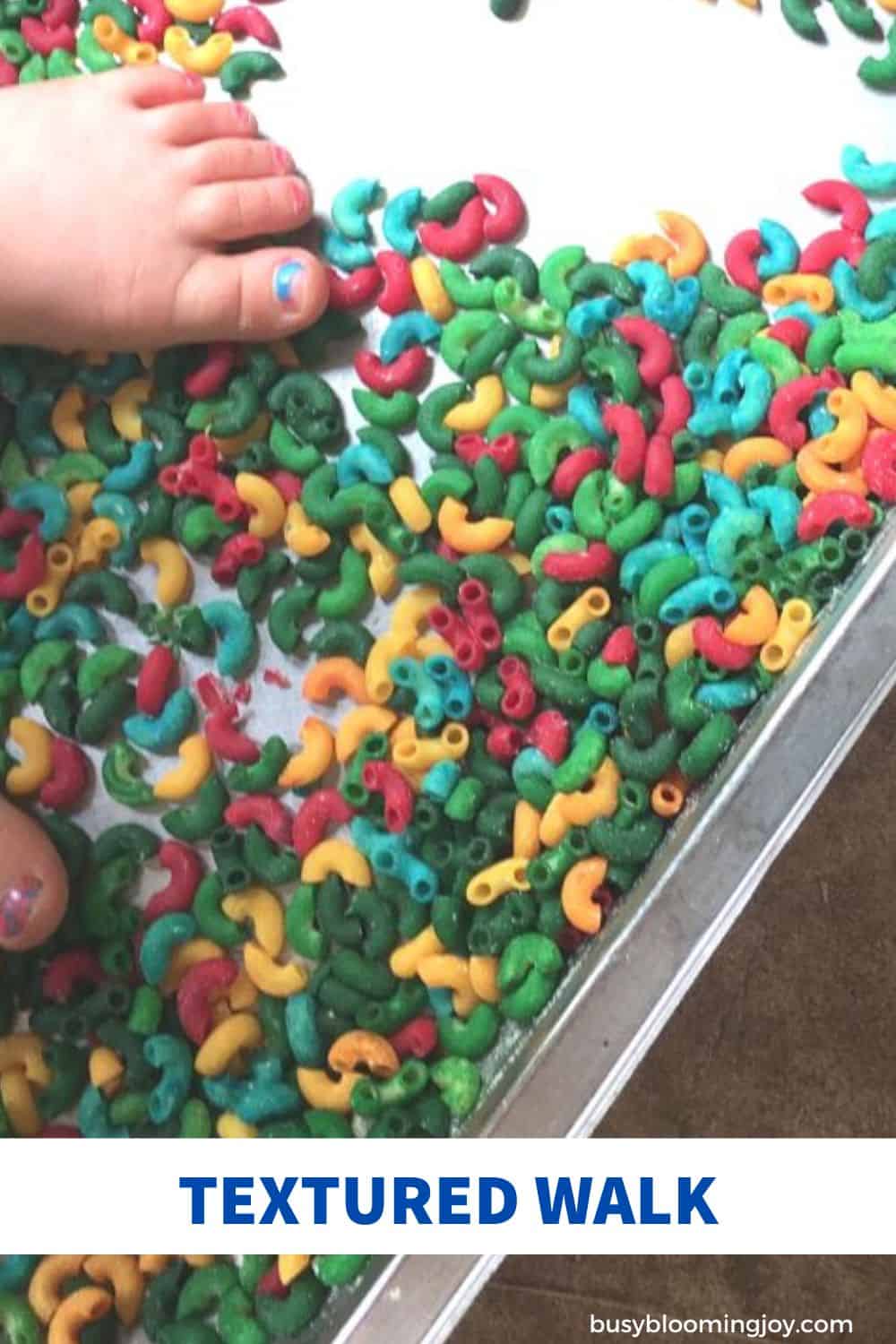
Find some different textured materials for your little one to walk across in bare feet — a piece of bubble wrap taped to the floor, a tray of dried rice or pasta (pictured), a cool metal baking tray, a piece of fake grass and so on.
The contrast between each surface is fascinating for toddlers and brilliant for sensory development and body awareness. Watch their faces as they step from one to the next!
Start simple for younger 1 year olds, especially those who’ve only just started walking, and challenge older preschoolers to guess the surface blindfolded!
Cloud Dough or Moon Sand Play
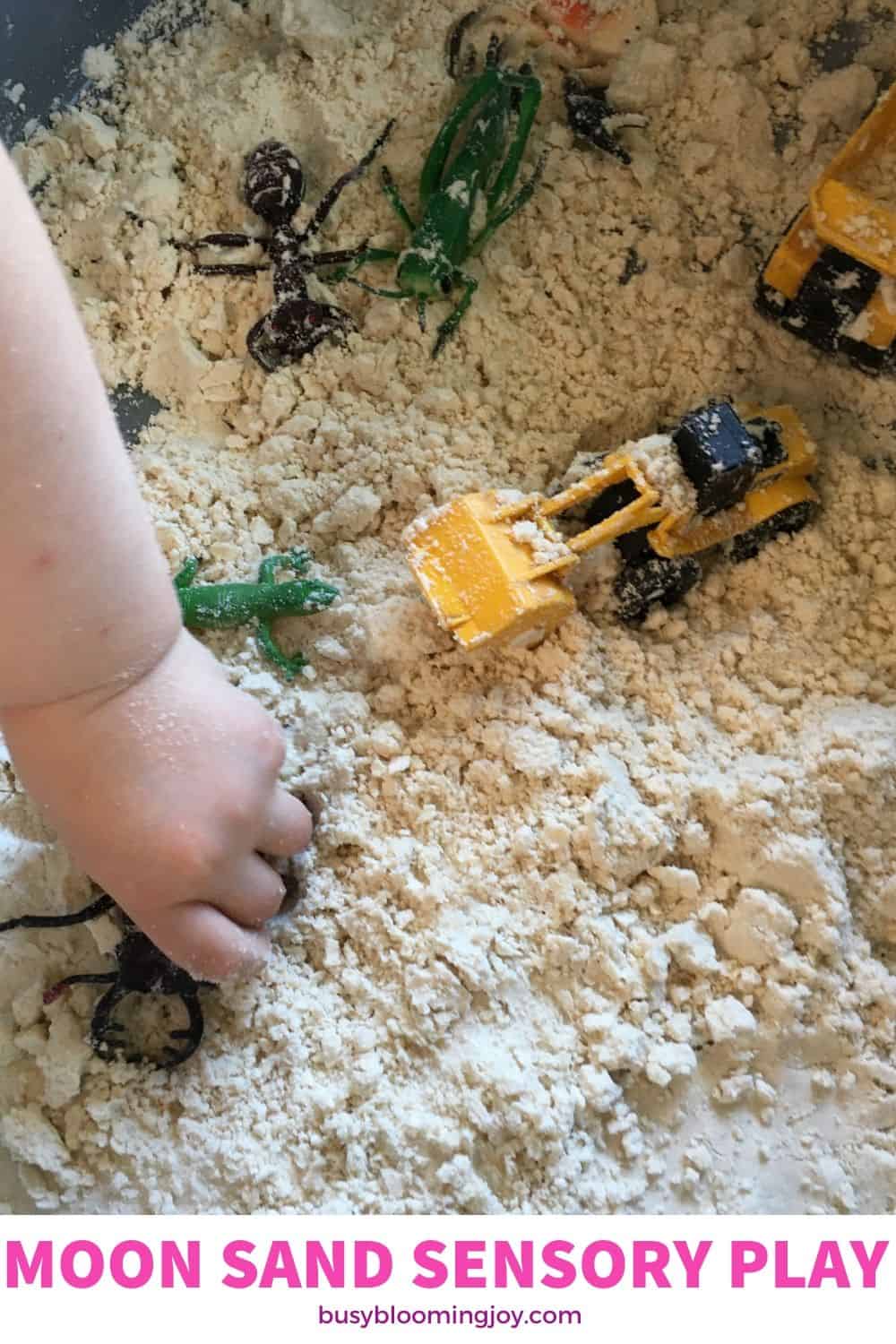
Mix 8 cups of plain flour with 1 cup of baby oil and you have cloud dough — a wonderfully soft, mouldable sensory material that holds its shape but crumbles beautifully.
Toddlers are completely captivated by it! To be honest, I think I like playing with it just as much…
Use moulds, cups and spoons to extend the play.
And the best bit? It’s far less messy than it looks — easy to scoop back into a container and store for next time.
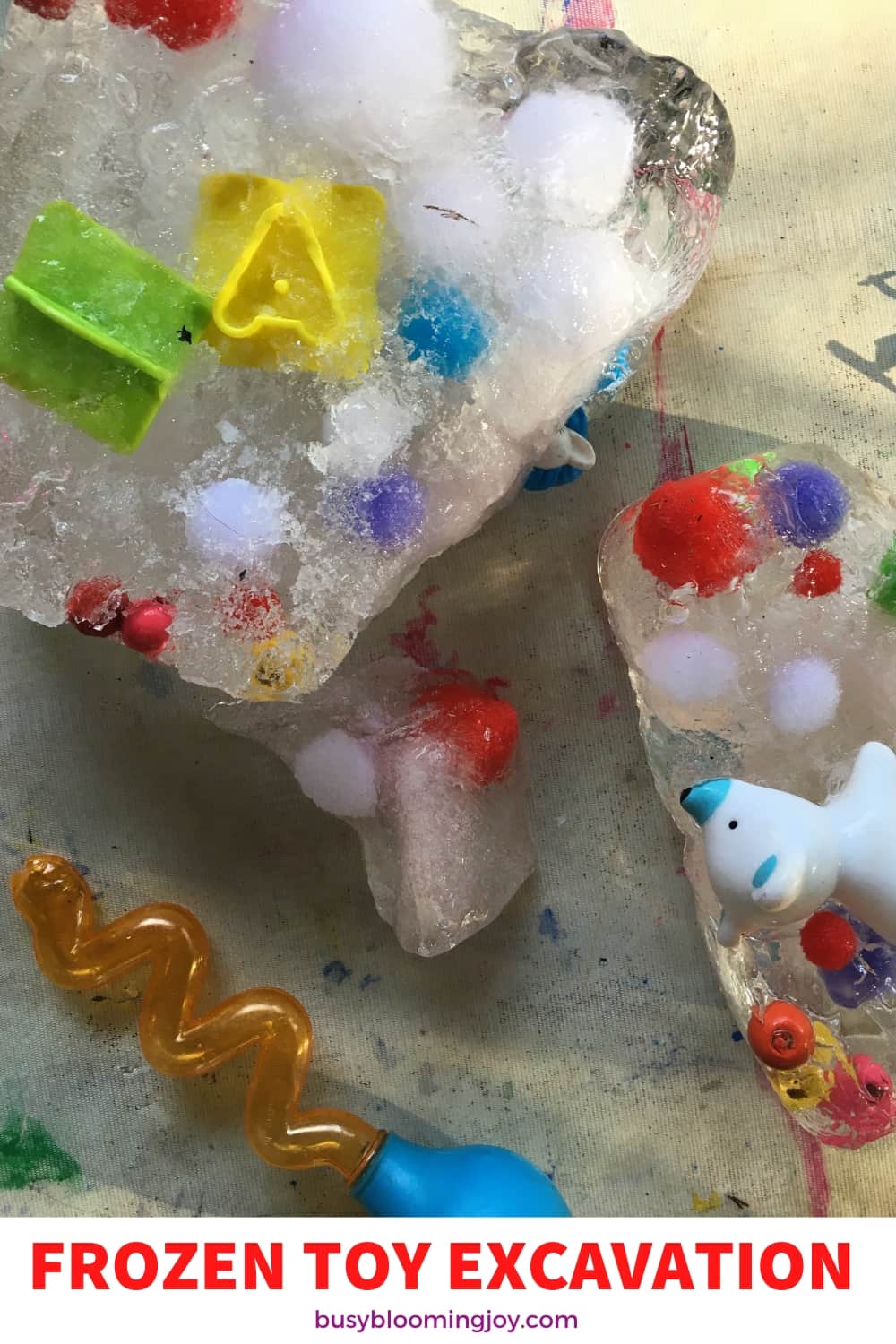
Ice Excavation
Freeze small toys, plastic animals or coins into a block of ice the night before. Pop it in a tray and give your little one tools to chip away at it — a wooden spoon, a plastic fork, a pipette of warm water.
The slow reveal of the hidden treasures is absolutely captivating for 2 and 3 year olds.
A brilliant sensory activity that also builds patience and fine motor skills.
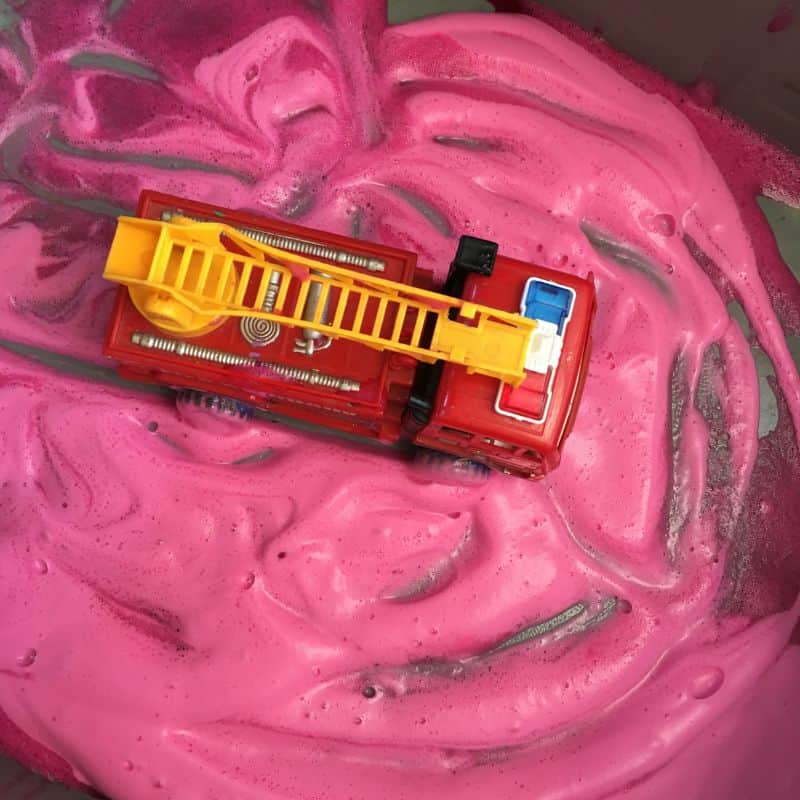
Shaving Foam Play
Squirt a pile of shaving foam onto a tray or directly onto the table and let your preschooler dive in.
They can draw patterns with their fingers, mix in a few drops of food colouring, or just squish and explore.
It smells lovely, feels fascinating, and wipes up very easily.
Feely Bag
Pop a selection of small objects into a pillowcase or cloth bag — a toy car, a spoon, a block, a ball, a sock.
Without looking inside, your little one reaches in and tries to identify each object by touch alone. Can they guess what it is before pulling it out?
A wonderful game for sensory development, vocabulary and concentrated focus.
Wipe Dispenser Sensory Box
If you’ve ever turned your back for two seconds and found half a pack of wipes scattered across the floor — this one’s for you.
Turns out that irresistible pull-and-reveal action is exactly what makes it such brilliant play for a 1, 2 or 3 year old. So lean into it!
Fill an empty wipe dispenser or tissue box with things they’re actually allowed to have — fabric scraps, washcloths, ribbons, paper scraps and so on. Let them pull to their heart’s content.
It keeps little hands busy, builds fine motor strength and satisfies that very toddler urge to empty absolutely everything. Win all round.
For 75 sensory play ideas specifically for younger toddlers, our sensory activities for 1 year olds post has you completely covered.
Creative Indoor Activities for Toddlers (Process Art & Simple Crafts)
Toddler art doesn’t need to be complicated or messy to be brilliant.
Process over product is the name of the game at this age — it’s the doing that matters, not the outcome. These creative indoor activities are simple to set up, use things you have at home, and may or may not produce artwork!
Painting INSIDE A Cardboard Box
The ultimate toddler art activity – but you do need a large cardboard box, large enough for your 1, 2 or 3 year old to sit inside.
Use washable toddler paint, strip them down, put them inside the box and let them go for it!
The sensory experience of paint between fingers is genuinely developmental — you can also add toothbrushes sponges and other utensils for your little ones to use as a paintbrush.
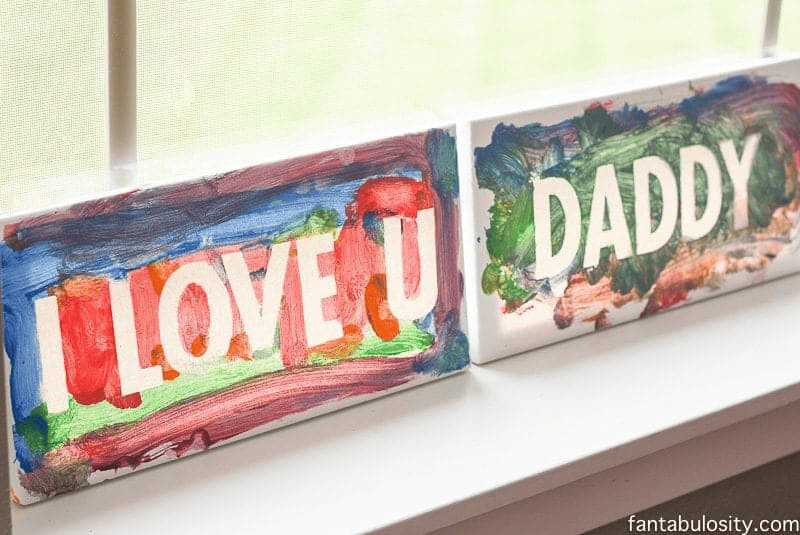
Tape Resist Craft
Use tape to spell out a word or simple shape on a blank canvas or piece of card. Then hand it over and let your little one paint any way they like over the top — brushes, fingers, sponges, it all works.
Once it’s dry, peel off the tape to reveal the pattern or letters hidden underneath. The big reveal never gets old.
A brilliant creative activity for 2 and 3 year olds that looks far more impressive than the effort involved — and makes a wonderful keepsake too.
I love thes idea from Fantabulosity pictured to create a cute Father’s Day gift for dad.
Window Drawing
Hand your little one some window crayons or washable markers and point them at the glass door or a low window pane.
It sounds chaotic. It really isn’t.
Drawing on a vertical surface is a completely different experience to paper on a table — and that novelty alone is enough to buy a solid stretch of independent, focused play. They’ll twist, reach, crouch and stretch to fill every inch of glass, which is brilliant for gross motor development too.
And the clean-up? A damp cloth and it’s gone. One of those rare activities that is genuinely as easy as it sounds.
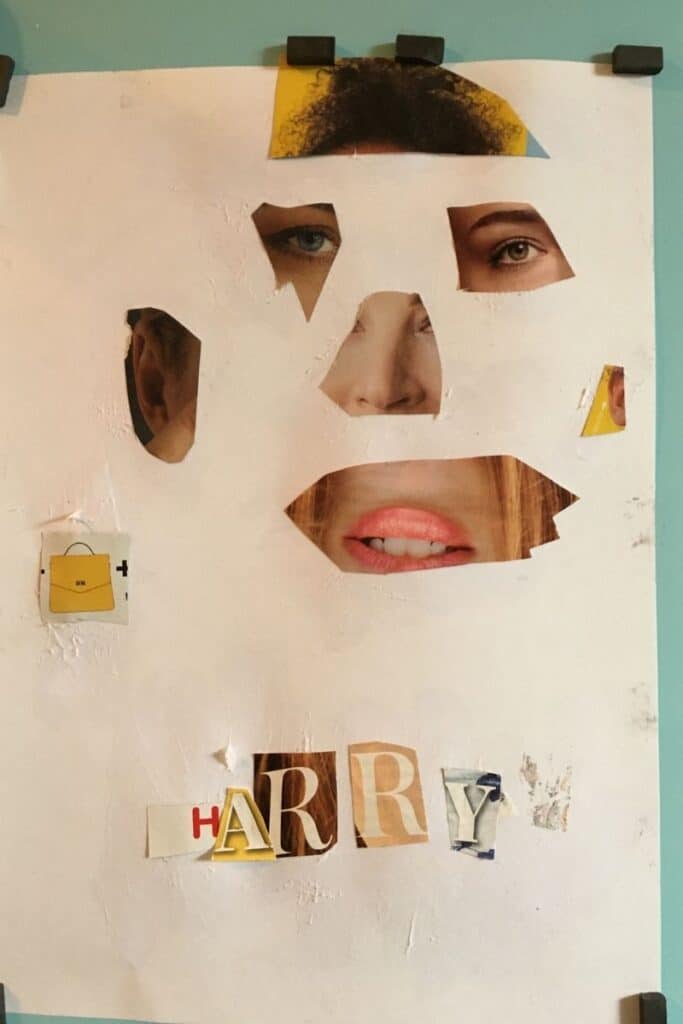
Collage from Magazines
Give your little one an old magazine or catalogue, child-safe scissors and a glue stick.
Get your kids to choose pictures and then cut or rip or them out and stick them onto a large piece of paper.
Tearing paper is brilliant for hand strength; cutting is a fantastic fine motor challenge for older preschoolers.
You can let them get creative or give them a theme.
A self-portrait is lots of fun! Above is the picture my eldest came up with when he was 4. It’s a keeper for sure!
Mess-Free Paint Mixing
Squeeze two colours of paint into a ziplock freezer bag and seal it tightly.
Your 1 or 2 year old can squish and mix the colours together through the bag with zero mess.
A brilliant way to introduce early colour mixing concepts — red and blue make purple! — without any of the chaos.
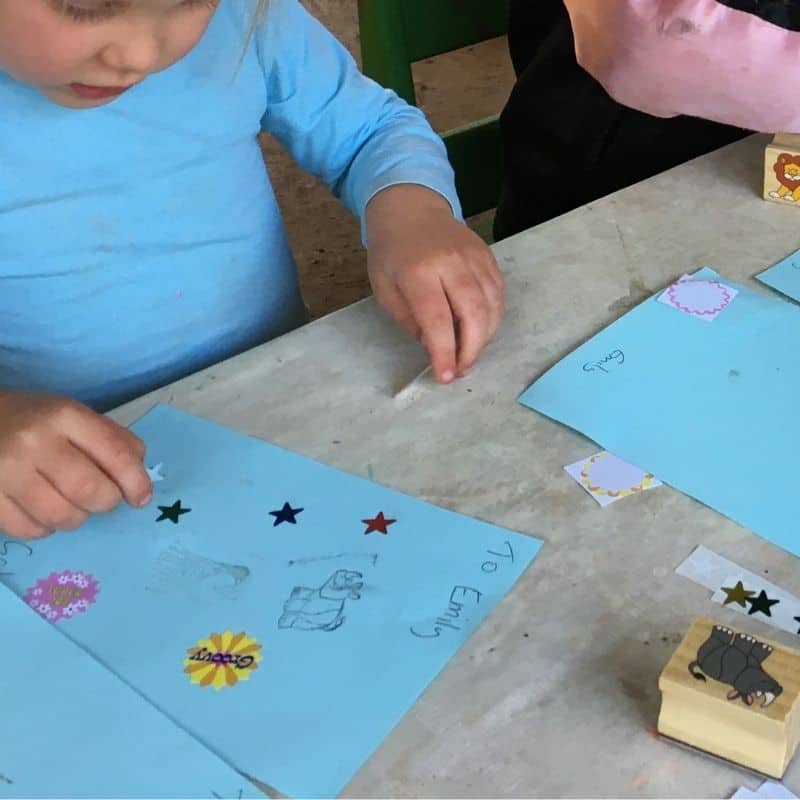
Sticker Art
Give your little one a selection of stickers and a blank piece of paper or card and see what they create.
Dot stickers, foam shapes, star stickers — the more variety the better. This is a simple creative activity and peeling and placing stickers is fantastic for fine motor development too.
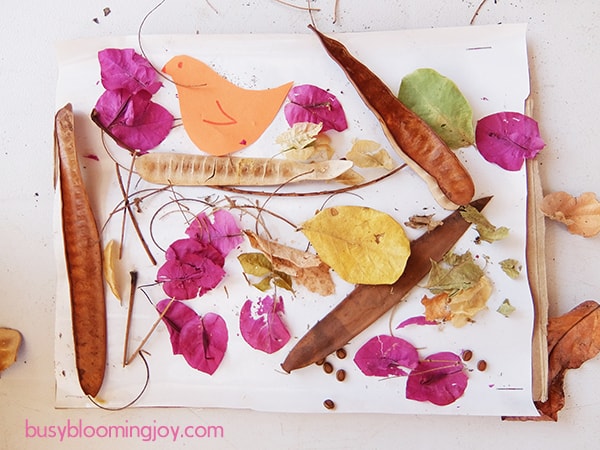
Contact Paper Nature Collage
Collect leaves, petals, sticks and other treasures on a walk and bring them home for a nature collage on contact paper.
Tape the contact paper sticky-side out to a piece of cardboard and let your preschooler press their finds onto it.
Seal with another sheet and you have a beautiful piece of seasonal art.
Cardboard Box Decorating
A large cardboard box is one of the best free art canvases there is.
Give your toddler some chunky crayons or washable markers and let them go wild. The box might become a house, a rocket, a car — or just a gloriously scribbled artwork.
Either way, they’ll be completely absorbed.
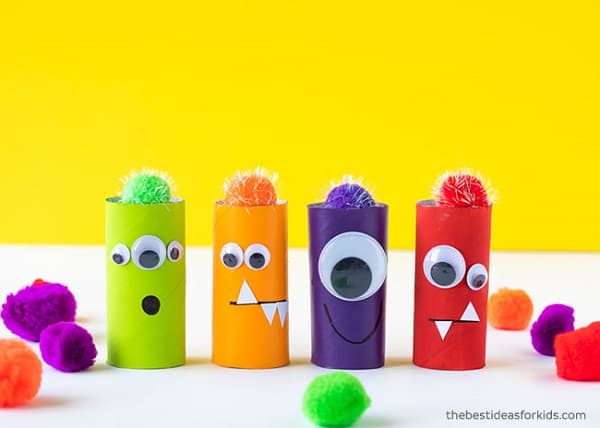
Toilet Roll Crafts
Never throw a toilet roll away again. In toddler craft terms, they are pure gold!
Flatten and cut them into rings for chain making, use them as stamp tools dipped in paint, or turn them into animals, rockets and characters with a bit of paint and some googly eyes.
Simple, free and endlessly versatile for 2 and 3 year olds alike.
I love the toilet paper roll characters pictured, from The Best Ideas For Kids, perfect for Halloween!
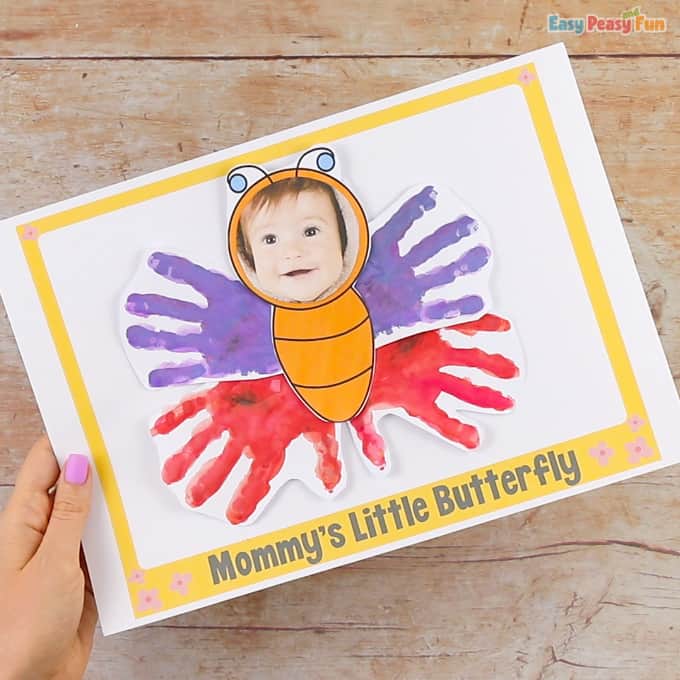
Handprint & Footprint Art
Handprint and footprint art is a toddler classic — and the resulting artwork is often worth keeping.
Use washable paint and have plenty of cloths ready!Turn the prints into animals, flowers, characters or trees or use a free printable like the one above from Easy Peasy and Fun.
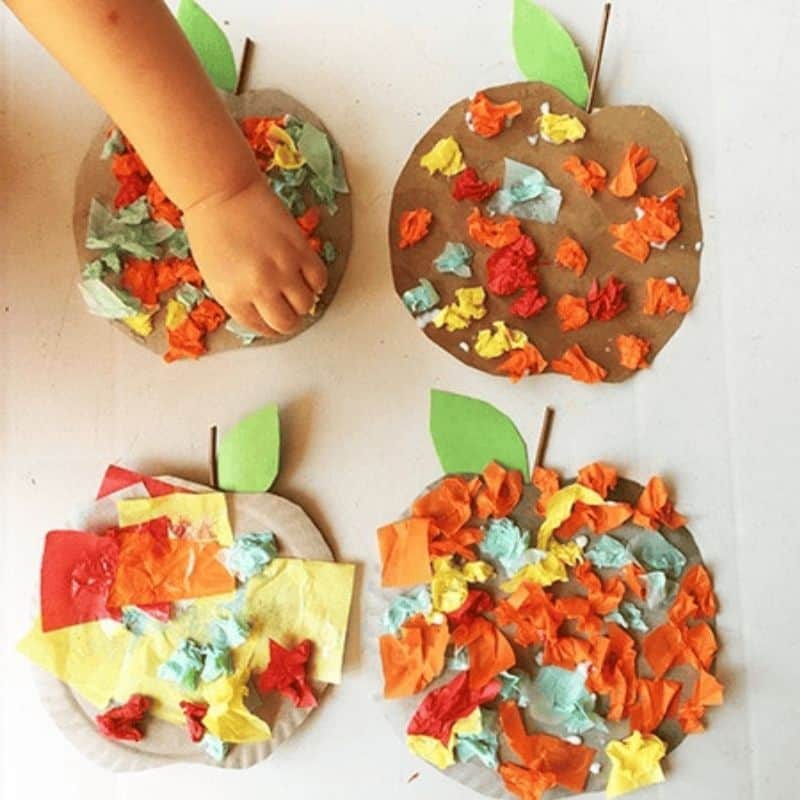
Tear, Scrunch & Stick
Give your toddler a pile of old newspapers, magazines or coloured paper and let them tear, scrunch and rip to their heart’s content.
Tearing paper is a brilliant hand-strengthening activity that little kids find deeply satisfying. Use the scraps to make a collage or fill a sensory tub
You can then stick and make a cute picture, such as the apples pictured above. Or skip that bit and just let them tear!
Chalk on Dark Paper
Swap the usual white paper for black or dark coloured card and give your 2 or 3 year old chunky chalk sticks to draw with.
The contrast is vivid and striking — and that’s all you need to add a little excitement to a tried and trusted favorite.
Great for mark-making, creativity and the big arm movements that build shoulder and core strength.
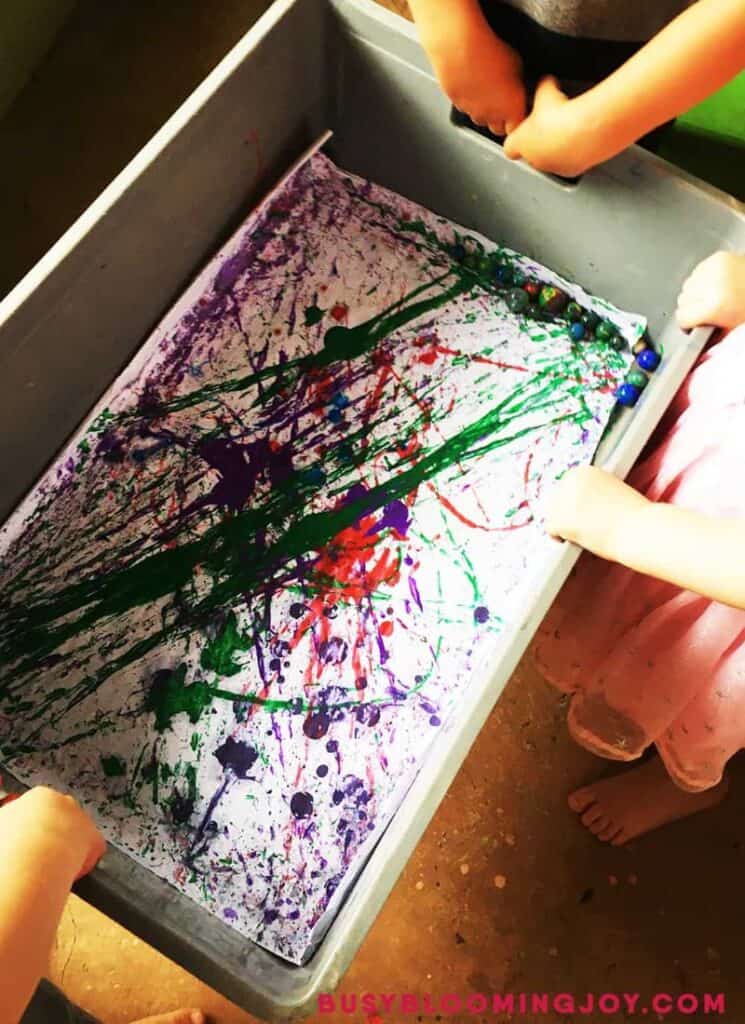
Marble Run Painting
Put a large sheet of paper in a shallow box or baking tray. Drop a marble or two into some paint and then tilt the tray to roll them across the paper.
The tracks left behind make beautiful, unpredictable patterns that little ones will find completely mesmerising!
Use different colours for a vivid, layered result — and prepare for them to want to do it again and again.
Junk Model Building
Collect cardboard tubes, boxes, lids, egg cartons and packaging — then set your preschooler loose with some masking tape and let them build whatever they like.
Junk modelling is such an open-ended, creative activity – 3, 4, 5…. in fact my 10 year old is still occupied for a seriously long time given a pile of boxes and some tape!
For more creative ideas, our arts and crafts for toddlers post is packed with projects ideal for 1, 2 and 3 year olds.
Learning Indoor Activities for Toddlers
The good news is that almost everything a toddler does is a learning activity — play is how little ones develop.
But these indoor learning activities have a more intentional educational element woven in. Think early maths, language, colours, shapes and problem-solving — all wrapped up in fun.
For a deep dive into age-appropriate development activities, our 1 year old development activities post covers cognitive, fine motor, language and social skills in detail.
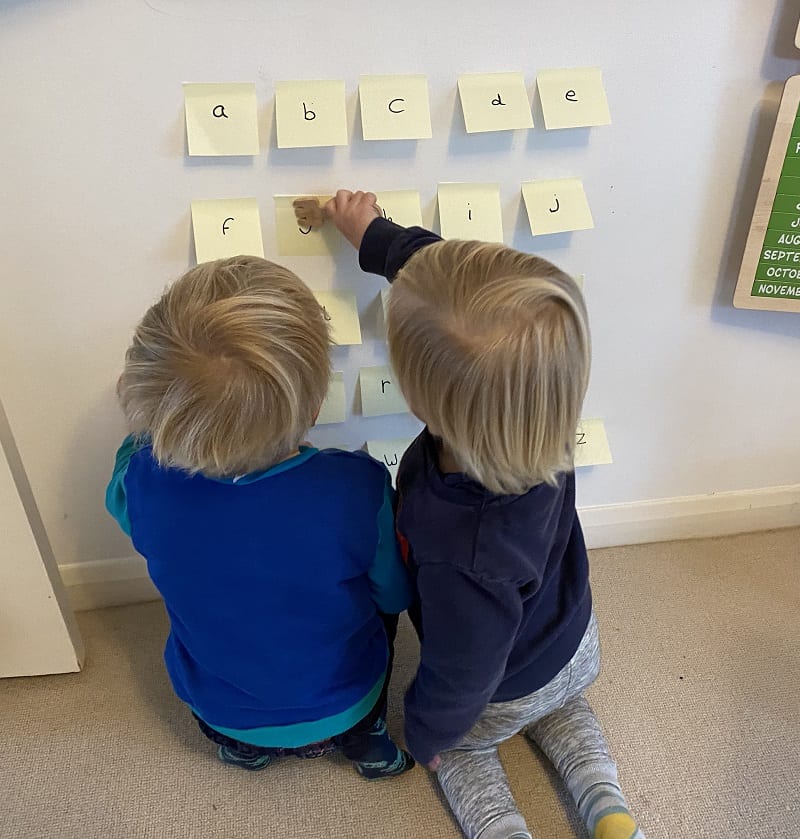
Swat the Letter
Write letters on post-it notes and stick them to a wall at your preschooler’s height.
Call out a letter and challenge them to find and swat it as quickly as possible — a fly swatter works brilliantly, but hands are fine too.
A fantastic way for 3 and 4 year olds to practise letter recognition that feels like a game rather than learning.
Colour Scavenger Hunt
Hide objects of different colours around the room — five red things, five blue things, five yellow things.
Place a piece of coloured paper on the table for each colour and challenge your little one to find all the objects and sort them onto the correct paper.
Brilliant for colour recognition, counting and movement all at once.
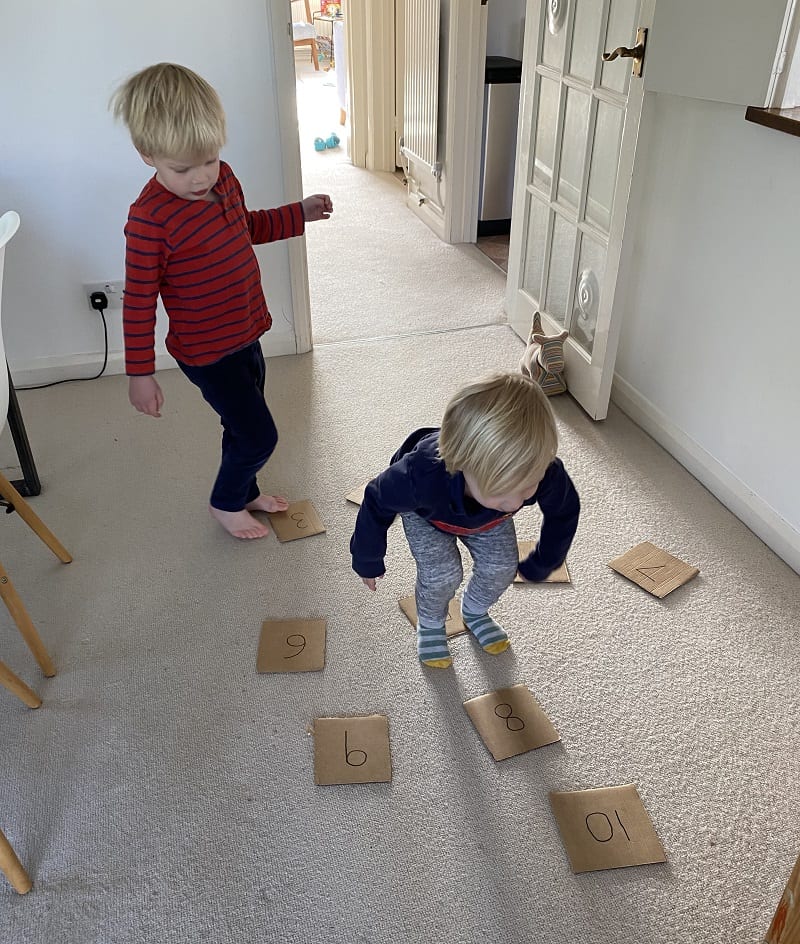
Jump on the Number
Write numbers on pieces of card or use numbered foam floor tiles.
Call out a number and your little one has to jump onto the correct one. Brilliant for number recognition, and the physical element keeps energy levels in check.
Start with just a few numbers and build up as confidence grows.
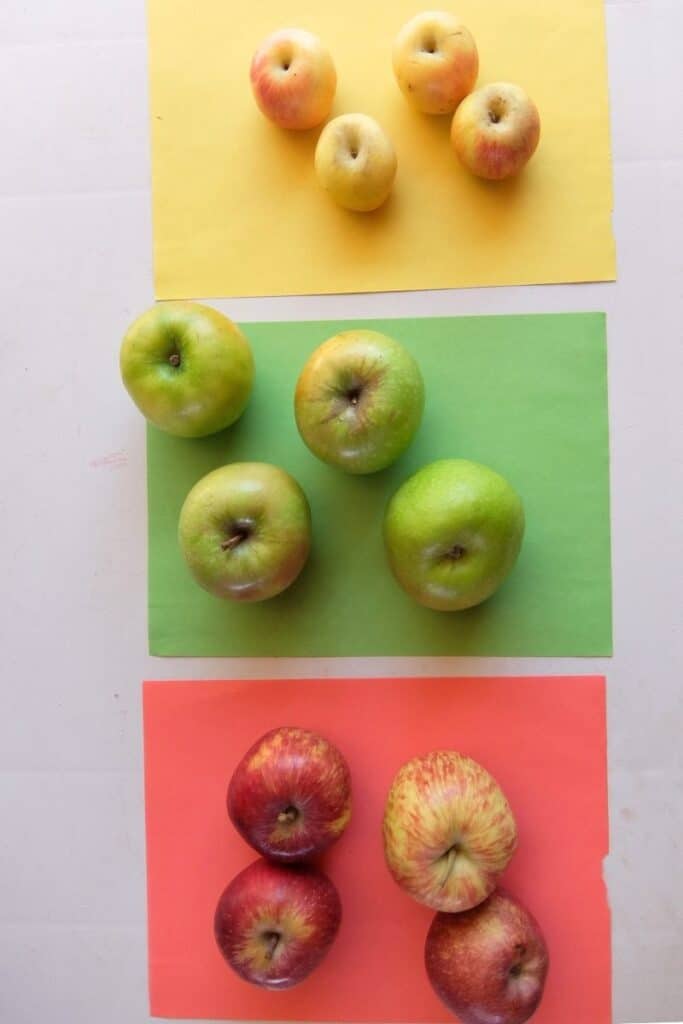
Sorting & Matching Games
Sorting is one of the core skills a toddler brain is working on constantly.
Set up a simple sorting activity using things you have at home — mix up two colours of building blocks and sort them, match socks from the laundry basket, sort small toys by type.
Muffin tins and ice cube trays are brilliant for containing the sorting for a 1 or 2 year old.
Listening Game
Give your preschooler a sequence of instructions to carry out in order — jump twice, run to the door, touch something blue, come back and do a star jump.
The challenge is to listen to all the instructions first and then carry them out in the right order. Start with two steps and build up.
Great for memory, listening and following directions.
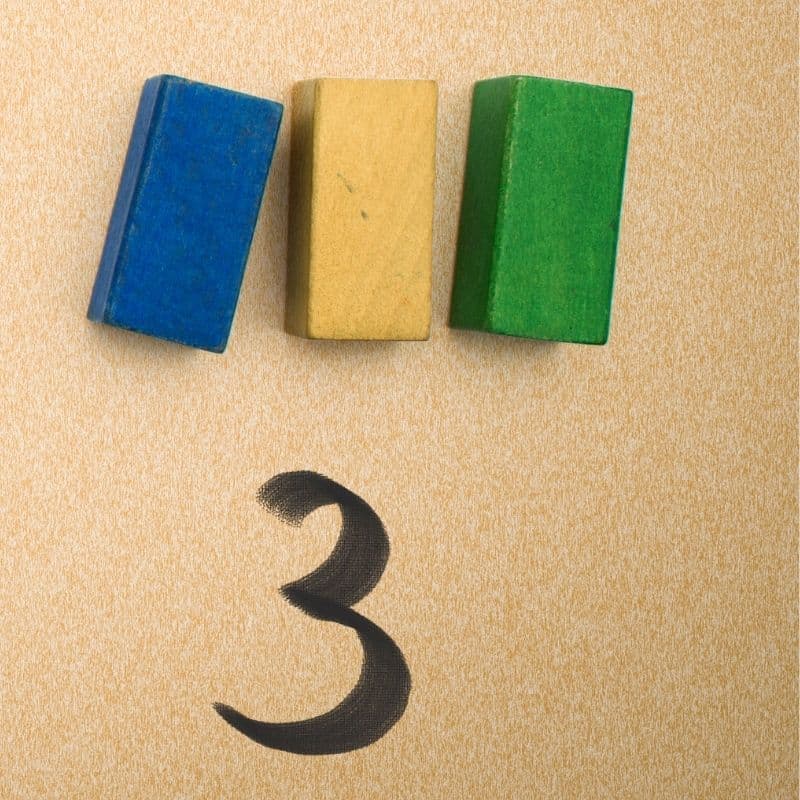
Counting with Everyday Objects
Maths doesn’t need flashcards or worksheets — everyday objects are all you need.
Count out spoons into a drawer, count toys as you put them away, count steps on the stairs. Make it part of the flow of the day rather than a separate activity.
This builds number sense naturally and in a way that actually sticks for little ones.
Beginning Sounds Scavenger Hunt
Challenge your 3 year old to find something in the room beginning with a particular letter sound.
“Find something beginning with B!” — a book, a ball, a blanket. Plant obvious items nearby when they’re just getting started, and send them further afield as their confidence grows.
A fun, active way to practise phonics.
Shape Tag
Call out a shape and challenge your little one to run and tag something in the room that is that shape.
A square cushion, a round clock, a rectangular book. Gets little kids thinking, moving and looking at the world around them with fresh eyes.
Add colours to increase the challenge for older preschoolers.
Act Out a Story
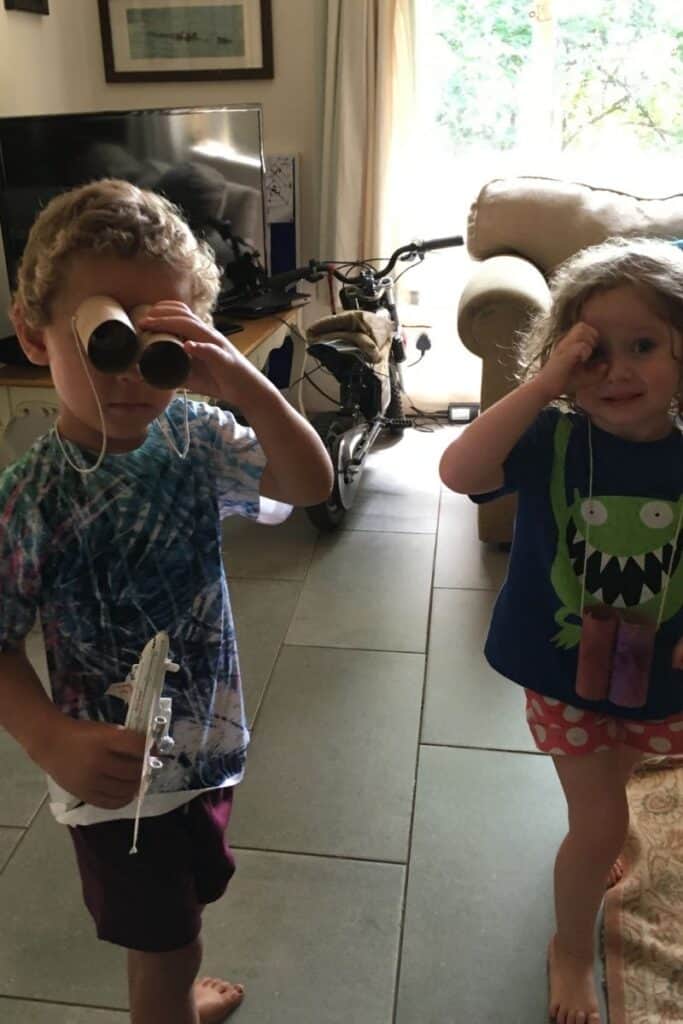
Choose a favourite book and act it out together.
We’re Going on a Bear Hunt is a wonderful one — my two loved tiptoeing around the house with their toilet roll binoculars!
lots of movement and sound effects. The Gruffalo works brilliantly too.
This combines language development, imagination, memory and physical play in one activity, and 2 and 3 year olds absolutely love the drama of it.
Simple Cooking Together
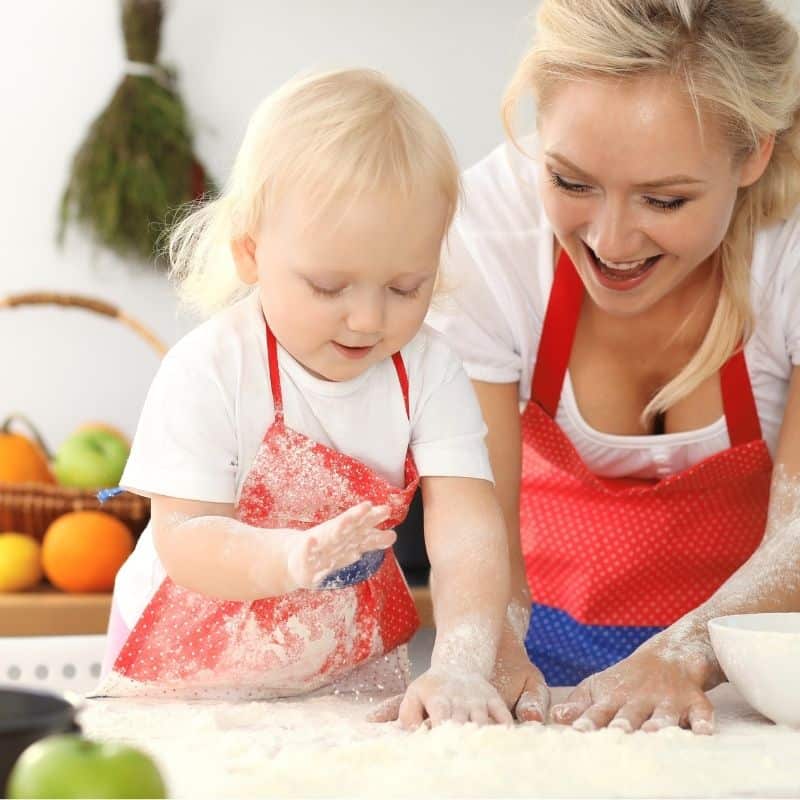
Getting your little one involved in simple cooking or baking is such a rich and engaging learning activity.
Measuring, pouring, stirring and watching ingredients change — it covers maths, science, language and fine motor skills all at once. Try simple things like pancakes, cupcakes or pizza with homemade dough.
And the sense of pride and excitement when a 2 or 3 year old gets to see their creation out of the oven and then eat it – priceless!
Weather Chart
Make a simple weather chart together and record the weather.
Each morning, look out of the window together and decide what the weather is doing. Draw a sun, cloud, rain, wind or snow on the chart.
A brilliant daily ritual that builds observation skills, vocabulary and an early understanding of the world around them.
Make Your Body Into Letters
Challenge your preschooler to make the shape of different letters with their body.
Some are easy — T, L, I — and some are hilariously tricky — S, B, R. Work through the alphabet together and see how creative they can get.
Great for letter recognition, body awareness and a serious amount of laughter.
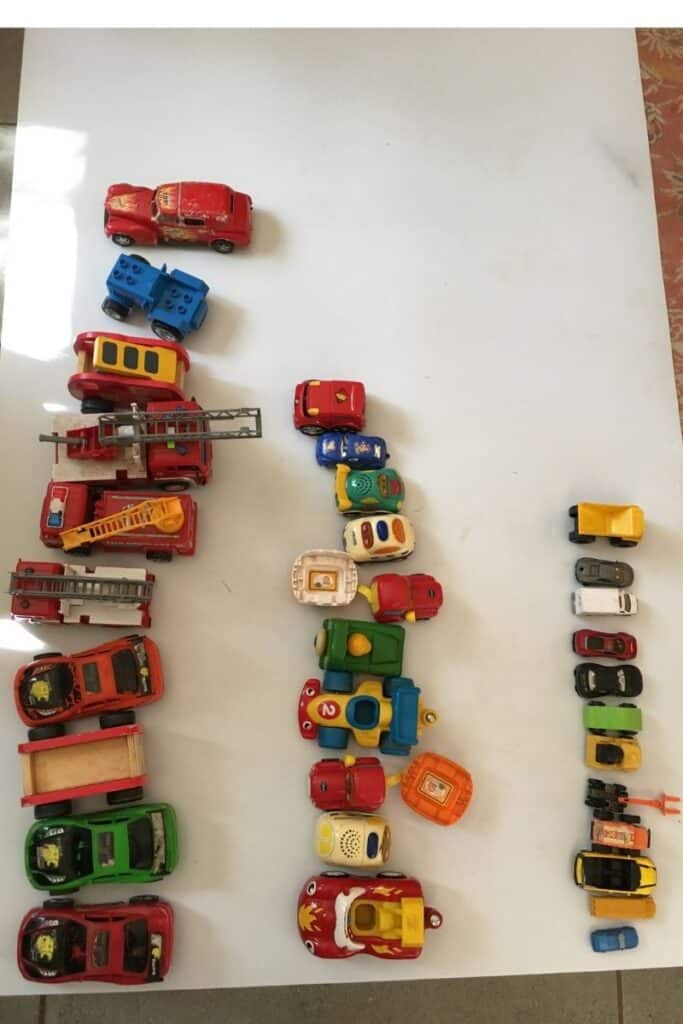
Size Ordering
Gather a collection of similar objects in different sizes — blocks, tins, cups, toys — and challenge your little one to line them up from smallest to biggest.
This is trickier than it sounds and really makes a 2 or 3 year old think.
A lovely early maths concept that you can revisit again and again as their understanding grows.
I Spy
The simplest game in the world and one that works brilliantly from around age 2 onwards.
“I spy with my little eye, something beginning with…” For younger 1 year olds, use colours instead of letters — “I spy something red.” Works at home, in the car, in a waiting room — anywhere.
Builds vocabulary, observation skills and the patience to take turns.
Simple Science Experiments
A few drops of food colouring in a glass of water. Baking soda and vinegar in a tray. Oil and water in a bottle. Ice melting in warm water.
Simple kitchen science is endlessly fascinating for preschoolers — they don’t need elaborate setups, just something that changes, fizzes, moves or surprises them.
Ask questions as you go — what do you think will happen? This is where scientific thinking begins.
Tips for Indoor Activities with Toddlers
A few things that’ll make any of these activities go more smoothly:
- Follow their lead. If your little one takes an activity in a completely different direction, go with it — that’s play-based learning in action.
- Keep it short. Most 1, 2 and 3 year olds focus for 15-20 minutes maximum. Have a few activities ready to rotate rather than expecting one thing to last all day.
- Rotate the options. Putting toys and activities away for a week or two and bringing them back out again makes them feel brand new.
- Let them help set up. Getting your preschooler involved in setting up the activity extends the entertainment — and helps with fine motor skills too.
- Lower your expectations on the outcome. Process over product, always. The scribble is as valuable as the masterpiece.
- Not every activity will be a hit. That’s completely normal. Try it another day — sometimes timing is everything with little kids.
Which Indoor Activity Will You Try First?
Whether you’ve got a busy 1 year old who needs to move, a 2 year old who’s into everything, or a 3 year old preschooler who needs a bit more of a challenge — there’s something here for everyone.
The aim is always to have fun first. A happy, engaged little one is a learning little one, whatever the activity.
So dip in, try a few things, and don’t worry if the obstacle course lasts three minutes before they wander off to empty the Tupperware drawer. That counts too.
Save this post for the next rainy day — you’ll be glad you did!